One Year Later, How Does the Andrés Giménez Trade Look for the Blue Jays?
A year ago, the trade for Andrés Giménez landed in Toronto with a mix of excitement and unease. It wasn’t the kind of deal that made the entire league stop and stare, but it was bold enough to make Blue Jays fans pause. It asked a difficult question right away: was this a move built for winning now, or for reshaping what winning might look like in the future?
Twelve months later, that question feels clearer — and heavier.

At the time, Giménez arrived as a promise of balance. Elite defense. Speed. Control. A player who could stabilize the infield and bring a different kind of energy to a roster that sometimes felt too one-dimensional. He wasn’t meant to be the loudest star. He was meant to be the glue, the quiet difference-maker who does the small things so well that the big picture starts to make sense.
And in many ways, that part of the vision worked.
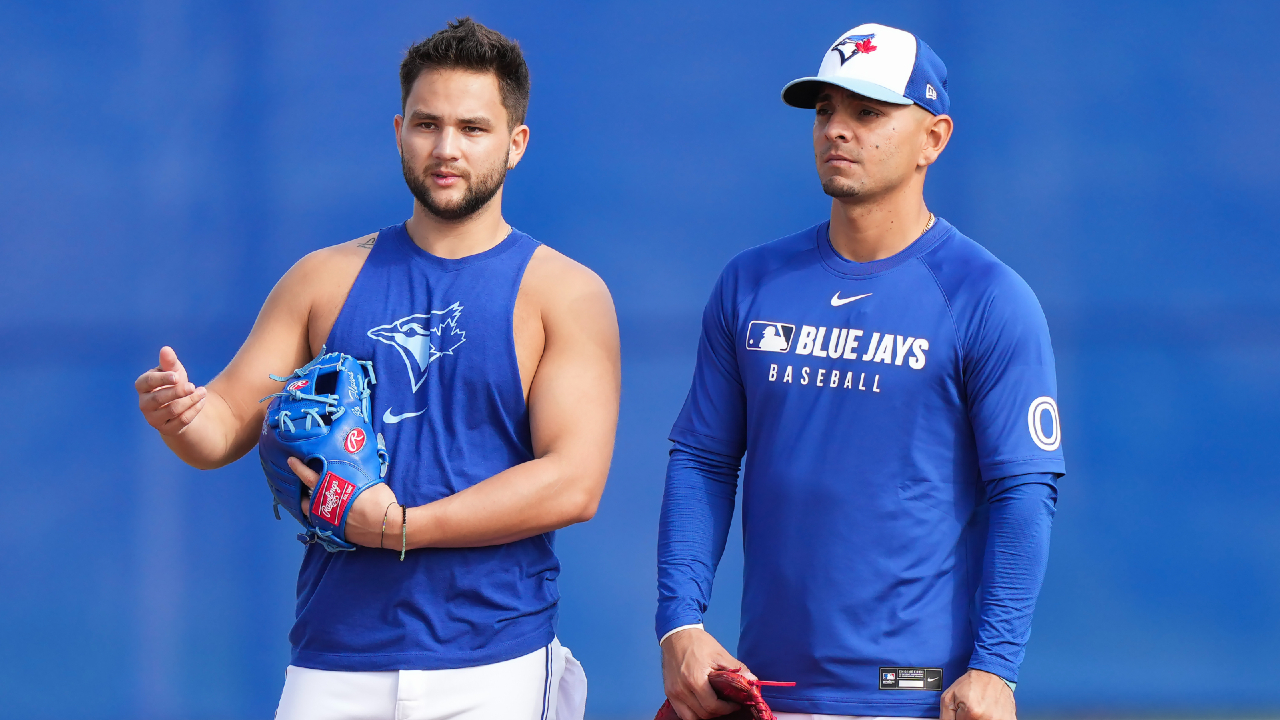
Watching Giménez in a Blue Jays uniform over the past year has been a lesson in reliability. His glove has been everything advertised — smooth, fearless, instinctive. Balls that once slipped through the infield have turned into outs. Pitchers have worked faster, more confidently, knowing the space behind them is protected. Defense doesn’t show up in highlight reels the way home runs do, but over a season, it reshapes games in subtle ways. Toronto felt that.
But baseball is never just about one side of the ball.
At the plate, Giménez has been streaky — brilliant in flashes, frustrating in stretches. There were weeks when his contact-first approach felt like a perfect complement to the lineup, setting the table, creating chaos on the bases. There were other weeks when the lack of power felt glaring, especially on nights when the Blue Jays desperately needed one swing to change everything. That inconsistency became part of the trade’s story, too.
And then there’s the shadow the deal inevitably cast.
Because the Giménez trade was never just about Giménez. It was about what Toronto gave up — in talent, in flexibility, in identity. It was about the ripple effects across the roster. It shifted conversations around Bo Bichette, around infield roles, around who truly represents the future core of the franchise. Even when things went well, the comparison lingered.
.jpg.618bb6f9c0d11a75a2615d002aa743a8.jpg)
That’s the burden of trades like this. You’re never evaluated in isolation. You’re always measured against what might have been.
One year later, it feels fair to say the Blue Jays didn’t “win” or “lose” the trade in a dramatic sense. Instead, they revealed themselves. The deal showed a front office willing to prioritize run prevention over fireworks, structure over star power, control over chaos. It showed a team trying to evolve rather than double down on the same formula that kept falling just short.
For some fans, that evolution feels refreshing. For others, it still feels incomplete.
The truth probably lives somewhere in between.
Giménez didn’t transform Toronto into a juggernaut. He didn’t fix every problem. But he also didn’t fail. He became what he was always supposed to be: a stabilizer. A tone-setter. A reminder that winning baseball isn’t always loud.

And maybe that’s the real verdict one year later.
The Andrés Giménez trade looks like a move made by a team searching for identity as much as success. A team trying to redefine how it competes in a league obsessed with power and headlines. It wasn’t a shortcut. It was a statement — cautious, calculated, and undeniably intentional.
The Blue Jays are still chasing the final piece. They’re still wrestling with consistency, with expectations, with the weight of unfinished business. But Giménez remains part of that chase, standing at second base, glove ready, doing the quiet work.
And sometimes, one year later, that’s all a trade can promise — not perfection, not certainty, but direction.
Whether that direction ultimately leads Toronto where it wants to go is a story still being written.