There’s a hidden subtext in everything Trent Williams says about offensive flow: he knows his body. At 36, he remains the best tackle in football, but no elite veteran wants to play extended snaps in grueling, grinding, overly methodical drives.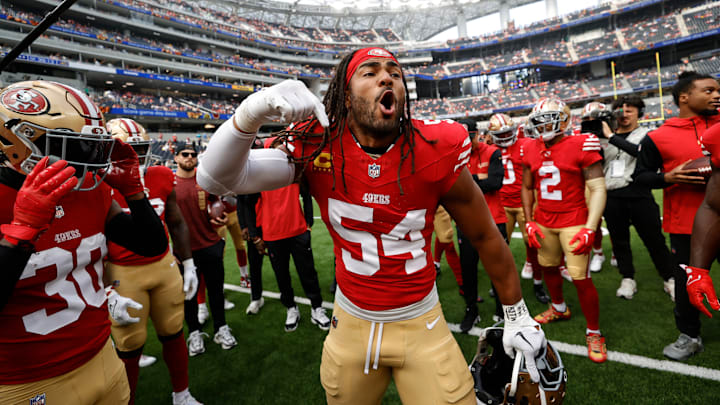
Tempo creates rhythm not just for the quarterback, but for the offensive line. It reduces prolonged trench battles. It reduces complex defensive fronts. It simplifies protection.
Williams’ fantasy is also, in part, a roadmap for sustaining himself — and the offensive line — deep into December and January.
The 49ers need him fresh more than they need almost anything else.
The 49ers Have Been Most Dangerous When They Embrace Controlled Chaos
Look back at the strongest stretches of the Shanahan era:
Explosive runs early
Quick-strike passes off misdirection
Compressed tempo after big gains
Defenses scrambling to stabilize
Shanahan’s scripted drives often feature pace and decisiveness, but that aggressiveness tends to fade after the first quarter. Williams wants that energy sustained — and opponents dread it.
San Francisco can overwhelm defenses with layers.
Williams is calling for one more layer.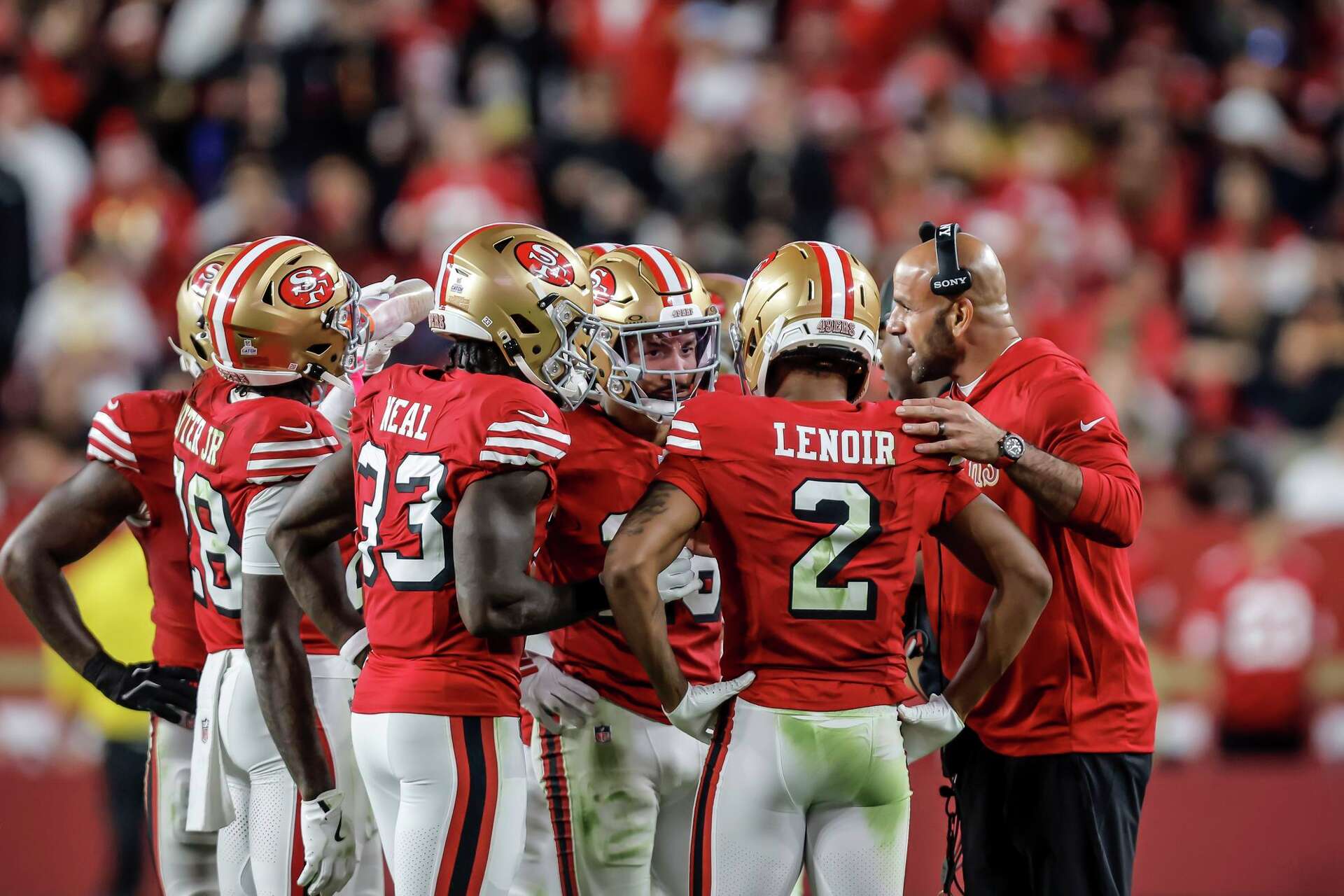
This Could Be the Adjustment That Unlocks Another Playoff Level
In the postseason, defenses tighten. Opponents know tendencies. Every snap becomes a leverage war. Shanahan has occasionally been criticized for rigidity in high-pressure games — not because his designs fail, but because opponents anticipate them.
Williams’ fantasy is an antidote to predictability.
The 49ers already have one of the league’s smartest and most dangerous offenses. Tempo variations and expanded modularity would turn them into something closer to unstoppable.
Imagine McCaffrey operating in early-down tempo.
Imagine Aiyuk and Deebo forcing mismatches before subs arrive.
Imagine Kittle attacking exhausted linebackers.
Imagine Purdy carving up static coverages.
This is not fantasy.
It’s entirely attainable.
So Why Haven’t the 49ers Done It Yet?
There are three main reasons:
1. Shanahan loves control.
Tempo reduces the ability to micromanage each play.
2. The offense is complex.
Faster pace requires simplified calls and universal understanding.
3. Risk aversion.
Tempo increases snap volume, and more snaps create more chances for mistakes.
But Williams isn’t proposing recklessness.
He’s proposing situational tempo — a tool, not an identity shift.
And the benefits outweigh the risks.
When a Leader Speaks, a Contender Listens
Trent Williams isn’t just a star — he’s a voice that carries weight in the building. When someone with his résumé, intelligence, and feel for the game offers insight, the 49ers would be foolish to ignore it.
Williams’ fantasy is not about ego or spotlight. It’s about improvement. Refinement. Evolution.
He sees a path for the 49ers to become more dominant.
He sees a way to push the offense into its next phase.
He sees something possible — and dangerous — for defenses.
The 49ers should take that vision seriously.
Final Take: This Fantasy Should Become a Blueprint
Trent Williams has spent his entire career dictating terms in the trenches. If he now believes the 49ers can dictate terms structurally as well, it’s worth taking to heart.
His fantasy is simple:
Let the offense breathe.
Let the weapons run.
Let defenses panic.
Let Purdy thrive in rhythm.
Let the 49ers unlock their final form.
San Francisco does not need to reinvent itself.
It simply needs to listen to one of its greatest players — and elevate what already works.
Williams’ fantasy should become reality.
Because if it does, the 49ers won’t just be dangerous.
They’ll be unstoppable.