Survival, however, is not the same as contention.
The Chiefs entered the season with Super Bowl expectations, not merely playoff hopes. Anything short of a championship has often been framed as disappointment in the Mahomes era. That framing must now change, at least temporarily. The AFC remains deep and unforgiving, with teams like Buffalo, Baltimore, and Cincinnati built to exploit even minor weaknesses.
Without Mahomes, the margin for error vanishes.
There is also the psychological impact. Mahomes has been more than a player; he has been a safety net. When games spiraled, teammates believed he would pull them back. When deficits grew, no lead felt safe for opponents. That belief cannot be replicated overnight.
Inside the locker room, players spoke carefully but honestly. One offensive lineman admitted the loss “felt like the floor dropping out.” A wide receiver described the silence after the game as heavier than any loss he could remember. Andy Reid, normally affable and measured, appeared visibly shaken during his press conference, choosing his words with deliberate restraint.
“This is part of football,” Reid said. “A hard part.”
Reid now faces one of the most complex challenges of his career. He must balance competitiveness with preservation, urgency with patience. The temptation to overhaul the offense overnight will be strong, but drastic changes often create new problems. Simplification may be the more realistic path.
But inside the building, the reality is unavoidable: the blueprint that defined this team must be rewritten under pressure.
The offensive line, long accustomed to extending plays, now bears a different responsibility. Protection schemes tighten. Holding calls loom larger. A single missed assignment can no longer be erased by magic. Every snap becomes a collective act of discipline.
The running game, once a complement, becomes a necessity. Yardage earned the hard way—three yards into a wall of bodies—suddenly matters more than ever. Clock management shifts from afterthought to priority. The play clock feels louder now.
Defenses across the league are already adjusting. Film rooms glow late into the night as coordinators sketch new plans, sensing vulnerability. Blitzes grow bolder. Coverage shells tighten. The fear that once dictated conservative play-calling fades, replaced by opportunity.
And yet, football has a way of revealing character in moments like this.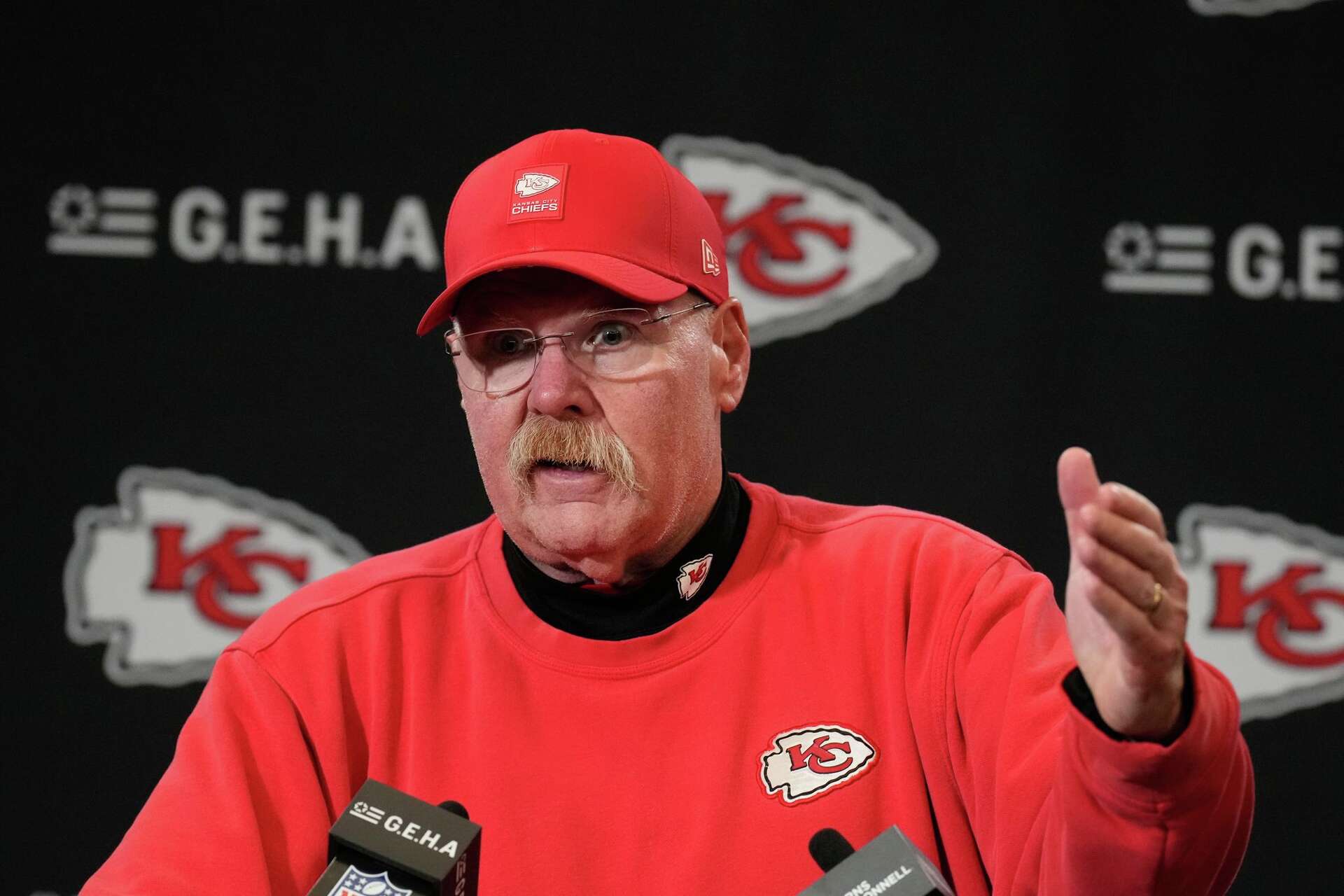
Some teams collapse under the weight of expectation unmet. Others discover identities they never knew they had. Kansas City stands at that crossroads, its path undecided.
The crowd mood will change too. Cheers may come later, require more effort. The collective gasp will return on every awkward hit, every scramble, every moment that echoes that night. Trauma lingers in stadiums longer than statistics do.
Still, there is something defiant in the way players talk about the weeks ahead. Not loud. Not boastful. Just steady. They unders tand the math. They understand the doubt. They also understand that seasons are not won on paper, and belief, once tested, can harden into something unbreakable.
The quarterback at the center of it all will watch from afar for now. Rehab rooms replace huddles. Ice baths replace film sessions on the field. His presence remains, though—felt in text messages, sideline visits, the quiet authority of someone who has been there before the fall.
Expect more reliance on the running game, even if it lacks star power. Expect shorter passing concepts, fewer deep shots, more emphasis on ball control and field position. The Chiefs’ defense, long overshadowed by offensive fireworks, may be asked to carry a heavier burden.
That shift requires buy-in.
Veteran leaders like Kelce and Chris Jones will play a critical role in maintaining cohesion. Younger players, suddenly thrust into larger roles, must grow quickly or risk exposing structural weaknesses. The margin between resilience and unraveling is thin.
Beyond the immediate season lies the longer view.
Mahomes’ rehabilitation will be meticulous and monitored. Modern ACL recoveries have extended careers and preserved mobility, but the process is physically and mentally demanding. The quarterback has built his game around movement, angles, and creativity. Even a slight hesitation, a fraction of lost explosiveness, could subtly alter his play.
The Chiefs must decide how aggressively to invest in protection and depth going forward. This injury, though not necessarily preventable, underscores the fragility of even the most durable-seeming stars. Depth, once a luxury, becomes necessity.
Financial implications loom as well. Mahomes’ contract secures him as the franchise cornerstone for years, but roster construction around him may shift. Resources may tilt further toward offensive line reinforcement, backup quarterback stability, and skill players who can win quickly without extended plays.
As autumn turns colder and the schedule tightens, Kansas City will learn who it really is without its axis. Fans will learn too. Loyalty is easy when victory feels preordained. It means more when hope has to be chosen, week after week.
The image of that night will linger—the body on the turf, the crowd standing in stunned silence, the tunnel swallowing certainty whole. It is a reminder written in grass stains and quiet shock: football gives nothing permanently. It only loans greatness, and sometimes, it asks for it back without warning.
What comes next will not look the same. It was never going to.
Around the league, rivals are recalculating. Schedules that once inspired dread now look different. Defensive coordinators will test Kansas City’s new limits, forcing Wentz and the retooled offense to prove they can sustain drives without mistakes.
The Chiefs are no longer the inevitability they once were. They are vulnerable.
And yet, vulnerability does not equal collapse.
There is precedent for teams rallying around adversity, for systems bending without breaking. Reid’s creativity has not vanished. The locker room still contains experience, pride, and belief. The AFC West remains competitive but navigable.
What changes is the narrative.
This season, for Kansas City, is no longer about dominance. It is about identity. About discovering who they are without the player who defined them. About learning whether the culture built around excellence can endure when excellence is temporarily absent.