Dallas Cowboys player talks mental health with Dallas ISD
Fresh off last night’s victory against the raiders, the cowboys turned the conversation back to the recent suicide of teammate Marshawn Kneeland. Defensive tackle Solomon Thomas talked with some Dallas ISD students this afternoon about the importance of mental health.He called it “a conversation we don’t have often enough.”
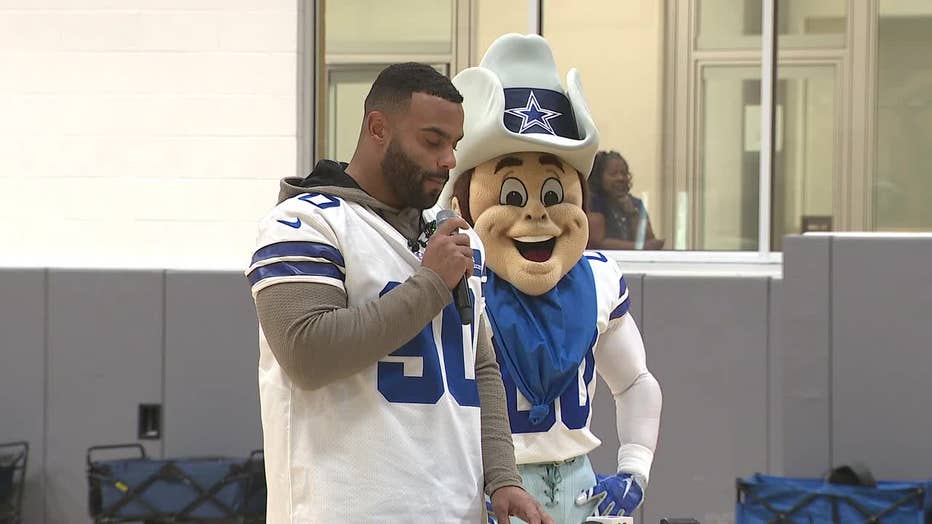
DALLAS – Dallas Cowboys defensive tackle Solomon Thomas met with several Dallas students on Tuesday to discuss the importance of mental health.
He called it a “conversation we don’t have often enough.”
Mental Health Discussion
What we know:
The Dallas Independent School District wants the topic of mental health to be a part of everyday conversations for its students.
The district teamed up with the Dallas Cowboys to try to reach student athletes and leaders who are often well-connected in their schools.
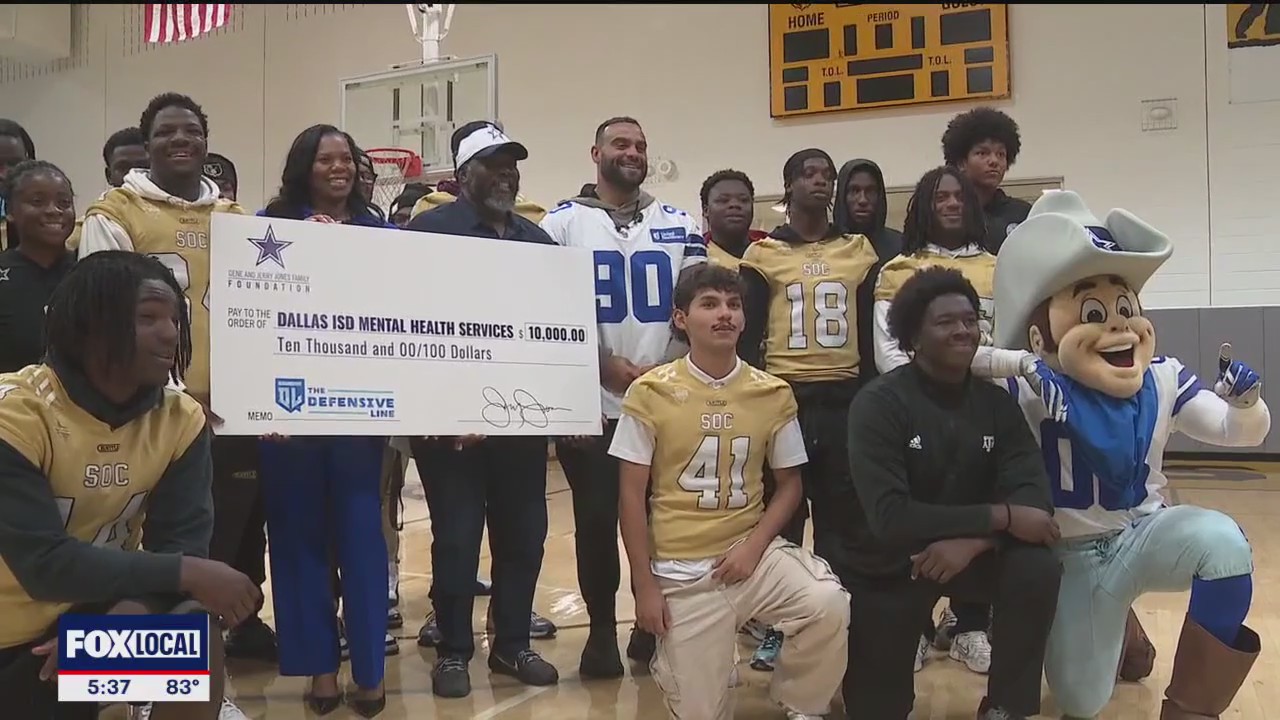
On Tuesday, Thomas spoke to a packed gymnasium at South Oak Cliff High School. He shared his own battle with grief and anxiety. Students also had a chance to ask him questions.
Related
Dig deeper:
Thomas knows about the struggles of mental health first. His sister committed suicide when she was just 24 years old.
She was the same age as fellow Dallas Cowboys player Marshawn Kneeland, who took his own life on Nov. 6.
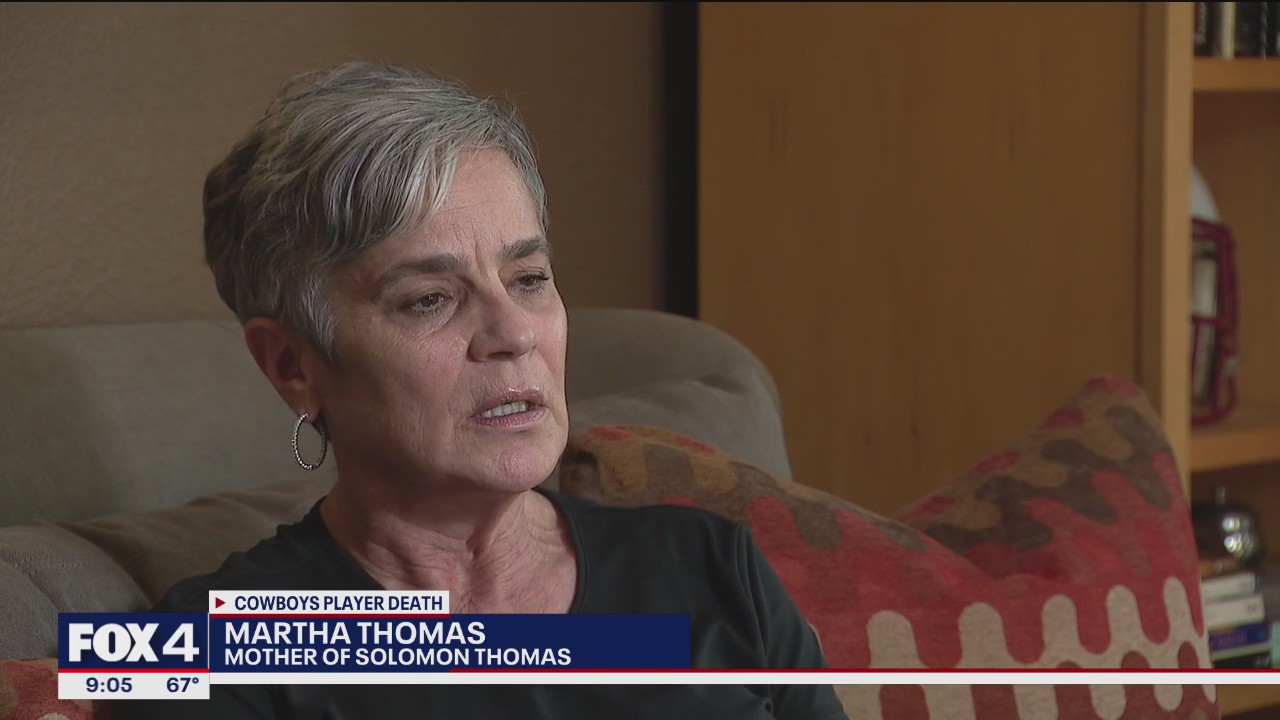
Thomas’ mother later founded a nonprofit to combat youth suicide.
What they’re saying:
“Coming here is definitely a little emotional. The feeling of loss trying to honor my sister, feelings of loss trying to honor Marshawn, which are very fresh,” Thomas said. “I want to make sure that no one feels the pain that they felt, the pain that my family feels, Marshawn’s family feels, because there’s way too many young people we lose to this cause.”
Thomas talked about his success with meditation and therapy. He also encouraged the students to be kind to others and to ask others how they are doing and whether they are okay.
“I wanted to put in their brains, ‘Hey, this is something we’re all going to have to deal with at some point in life. You have to talk about it.’ Give them key points. It’s okay to not be okay. It’s okay to get help. Just to relate to them that I was once in their shoes,” he said.
What’s next:
Dallas ISD is encouraging students who may need help to reach out to a teacher, school counselor, or the district’s mental health services department.
Thomas presented the district with a $10,000 check for the department courtesy of the Gene and Jerry Jones Family Foundation.
The gym went silent the moment Solomon Thomas placed an old, folded note on the podium. It looked out of place — worn edges, creased lines, handwriting faded by time and tears. Before he said a word, the students leaned forward, sensing something heavy was coming. Most had expected a typical athlete speech about hard work or perseverance. None expected a 6-foot-3, 295-pound NFL defensive lineman to stand there holding a note written by his sister shortly before she took her own life.
Thomas didn’t raise his voice. He didn’t need to. The weight in his hands did it for him.
“I carry this everywhere,” he began. “It reminds me why I talk about mental health — and why I’ll never stop.”
With that, the tone of the afternoon shifted. The students at North Dallas High School were no longer listening to a football star. They were listening to a brother, a survivor, and a man still learning how to navigate life after a loss that could have swallowed him whole.
A Visit Unlike Any Other
The Dallas Cowboys had arranged the event as part of their community mental-health outreach initiative — a program designed to bring credible, honest voices to young people who may be silently struggling. But even organizers admitted privately: No one delivers this message like Solomon Thomas.
He arrived without fanfare. No entourage, no reporters in the room, no cameras trailing behind him. He wore a black long-sleeve shirt with the word “Hope” stitched across the chest. His only accessory was the bracelet he has worn for years, engraved with his sister’s name: Ella Elizabeth Thomas.
When he walked into the gym, students were talking, laughing, scrolling their phones. Within minutes, the energy shifted. Something in the way he spoke — slowly at first, then with growing conviction — made the room take him seriously.
“I used to think being strong meant being silent,” he said. “But silence nearly killed me.”
The NFL Player Who Became an Advocate
Thomas’s message didn’t come from a script or a PR handbook. It came from lived pain.
In 2018, during his time with the San Francisco 49ers, his sister Ella died by suicide at age 24. The loss shook every part of his life — his career, his identity, his sense of direction. He spiraled into depression, anxiety, and a darkness he rarely discussed publicly.
But instead of hiding it forever, he chose to speak.
That decision changed not just his career, but the path of his life.
Today, as a Dallas Cowboy, Thomas has become one of the NFL’s most authentic mental-health advocates. He co-founded The Defensive Line, a nonprofit dedicated to ending youth suicide, particularly among students of color. He works with schools, community centers, and grassroots organizations. He talks openly about therapy, grief, and vulnerability — words rarely associated with football.
Yet here he was, standing in front of teenagers, trying to give them what he wishes someone had given him at that age: permission to speak.
The Moment That Hooked Every Student
At one point, Thomas folded his hands, paused, and scanned the audience. The gym was so quiet, the hum of the overhead lights felt loud.
“I need to tell you something,” he said. “I look strong on game days. I look tough. I get paid to hit grown men. But none of that protected me when I lost my sister.”
Several students dropped their eyes, suddenly studying their shoes. Others leaned forward. A few nodded, already recognizing something familiar in his words.
Thomas continued:
“For months, I pretended I was okay. I went to practice. I lifted weights. I laughed in front of teammates. But when I went home, I’d sit in the dark and feel like I was falling.”
He didn’t dramatize it. He didn’t sanitize it. He just told the truth.
It landed harder than any tackle he had ever delivered on the field.
Connecting Through Vulnerability
Teachers in the back exchanged glances. They had seen athletes speak before — messages about discipline, teamwork, staying in school. But rarely had they seen a professional player allow himself to be this vulnerable.
Thomas walked away from the podium and sat on the edge of the stage, feet dangling as if he were talking to a group of friends rather than a gym full of students.
“Some of you are carrying things no one else knows about,” he said. “Family stuff. Pressure. Fear. Loneliness. Maybe you think nobody would understand.”