There is a particular kind of silence that settles over AT&T Stadium when CeeDee Lamb elevates into the air — the split second when 90,000 fans collectively hold their breath, waiting to see what impossible thing he’s about to pull off next. For five seasons now, Lamb has been the Cowboys’ human highlight reel, the player who turns broken coverages into big gains, contested balls into jaw-dropping catches, and routine Sundays into poetry.
The journey from Oklahoma standout to one of the highest-paid receivers in the NFL has not been accidental. It’s been a carefully constructed empire of discipline, recovery, training, and unshakable mental focus. And as the Cowboys enter a decisive stretch of the 2025 season, Lamb’s commitment to staying at the top of his game has never mattered more.
A Star From the Start
From the moment he was selected in the first round of the 2020 NFL Draft, Lamb was expected to be good. What the Cowboys didn’t fully anticipate was just how quickly “good” would become “elite.”
Within his first season, he carved out a role as Dak Prescott’s most reliable weapon, bringing explosiveness, route sophistication, and yards-after-catch wizardry to an offense already stocked with talent. By his second year, he was the unquestioned WR1. By his third, he was a superstar.
His 2023 season still stands as the gold standard for Cowboys receivers in the modern era:
-
135 receptions
-
1,749 receiving yards
-
12 touchdowns
That performance secured Lamb a four-year, $136 million extension — a contract that not only rewarded his production but acknowledged that he had become the heart of the Cowboys’ passing attack.
Even Injuries Can’t Slow Him Down
The 2024 and 2025 seasons have presented new challenges. Lamb has battled a right-shoulder injury, a high ankle sprain, and the lingering physical setbacks that accumulate in a league built on collisions. He missed three games early this season after the ankle injury, breaking a streak of uncanny durability.
But when he’s on the field, the numbers remain elite:
-
35 receptions
-
491 yards
-
1 touchdown
-
Only six games played
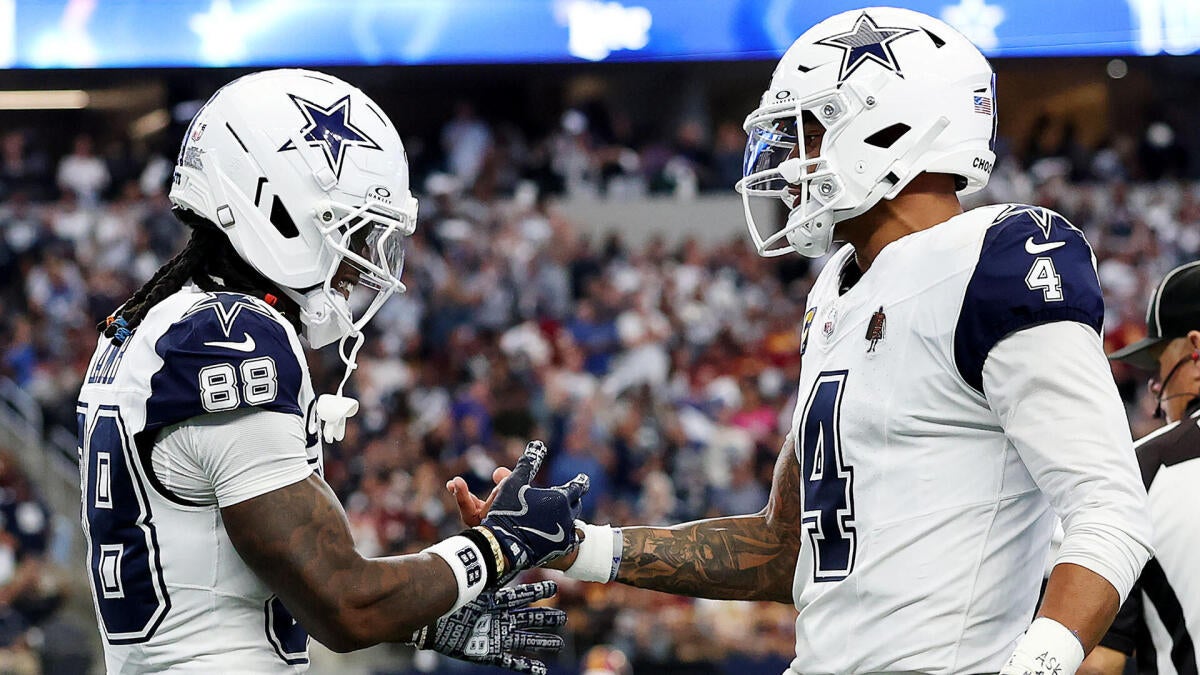
The production hasn’t just returned — it’s steadily climbing. The rhythm between Lamb and Prescott, disrupted early, is beginning to look familiar again. And next to George Pickens, Lamb is giving Dallas one of the most dangerous receiver duos in football.
Unfortunately for Dallas, the offense hasn’t been the problem. The defense has collapsed, allowing over 30.8 points per game, burying the Cowboys in shootouts that even Lamb’s brilliance can’t consistently bail them out of.
Now, entering a must-win Monday Night Football matchup against the Las Vegas Raiders, the Cowboys sit second in the NFC East but miles from real playoff contention. Without a dramatic turnaround, they’ll need nothing short of a miracle to reenter the postseason picture.
The $1.3 Million Body
If there is one thing that separates Lamb from most of his peers — beyond talent — it is the amount of time, money, and intention he invests into the machine that is his body.
According to Sportskeeda, Lamb spends $1.3 million per year on physical recovery and performance maintenance. It’s an extraordinary number, one that reflects elite-level commitment rather than indulgence.
His regimen includes:
-
Ice baths
-
Jacuzzis
-
Saunas
-
Steam rooms
-
Red-light therapy
-
Hyperbaric oxygen chambers
This isn’t simply pampering — it’s scientific, intentional, and rooted in longevity. Many NFL players have access to the same tools, but few use them with the discipline Lamb shows.
He is building not just a career, but a legacy.
A Blueprint of Discipline
Lamb’s routine looks more like the program of a world-class Olympic athlete than that of a wide receiver. Teammates speak openly about his consistency — early mornings, late nights, and zero tolerance for the distractions that derail so many stars.
There are no off-field controversies.
No late-night headlines.
No “he said, he did” noise.
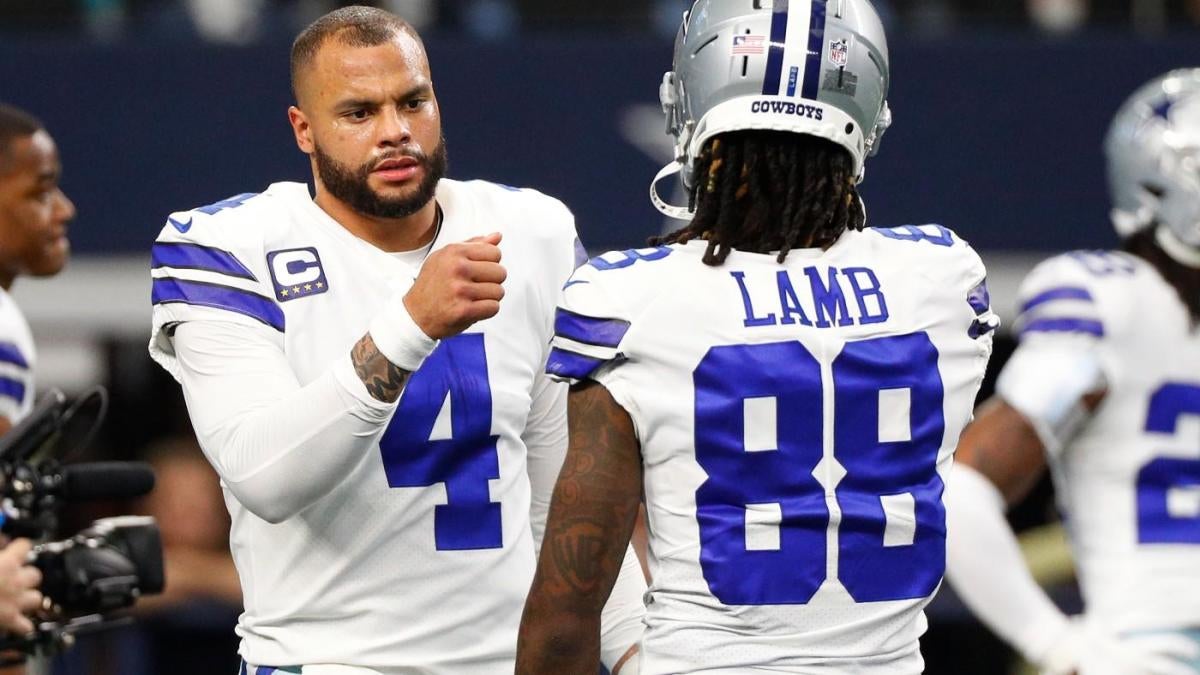
Lamb keeps his world small, controlled, and focused.
That level of discipline has allowed him to:
-
Bounce back from injuries in record time
-
Maintain elite conditioning throughout grueling seasons
-
Extend his peak by years, maybe even a decade
-
Remain one of the most heavily targeted receivers in the NFL
Coaches have said repeatedly that he prepares “like a quarterback,” studying defenses, identifying tendencies, and refining every part of his game from hand placement to stride length.
His growth isn’t random — it’s engineered.
Why the Cowboys Still Need Him More Than Ever
For all of Lamb’s brilliance, the Cowboys’ 2025 campaign has been wildly uneven. The offense is explosive, but the defense has crumbled under the weight of injuries and inconsistency.
And that has forced Lamb into an uncomfortable role — the superstar carrying a team that isn’t built to support him right now.
The Cowboys’ playoff hopes are fading, and Monday Night Football against the Raiders has the feel of a crossroads.
Win, and Dallas stays alive.
Lose, and the postseason dreams may evaporate entirely.
III. THE WEIGHT OF EXPECTATION
Sports analysts love to talk about pressure—what it does, whom it crushes, whom it sharpens. For Dallas, pressure isn’t a condition. It’s an environment. It hums through the stadium, seeps into practice, chases players home.
Lamb grew up around pressure. He was built in it.
Prescott inherited pressure the moment he became the franchise’s face.
But pressure magnifies cracks. And lately, the cracks were widening. Lamb’s production remained elite, but his body language occasionally betrayed frustration. Prescott’s calm demeanor sometimes bordered on too calm for some fans hungry for visible fire.
Yet those interpretations often missed the truth: behind the scenes, Lamb and Prescott were closer than ever—meeting, strategizing, challenging each other in film rooms and weight rooms. Lamb’s message wasn’t division. It was a demand for unity, sharpened into urgency.
“It wasn’t at Dak,” a teammate told me. “It was for Dak. And for all of us.”
Still, fans debated. Commentators debated. Former players on talk shows debated. Every opinion added more fog.
IV. THE FOREST RETURNS
Three days after Lamb’s statement, I found myself thinking again about the stranger in the forest. About his trembling voice. About the silhouette he claimed was following him. About the way the trees shifted as if responding to some invisible presence.
It made no sense.
But neither did the feeling that his warning was becoming more relevant.
Sports journalism teaches you to categorize everything: fact, quote, statistic, narrative. The forest belonged in none of them. Yet the memory kept resurfacing as I followed the Cowboys through practice sessions, team meetings, film reviews.
The stranger’s voice echoed:
“He’s running out of time.”
Who was “he”?
Prescott?
Lamb?
Someone else?
Or was I simply letting an eerie night distort the reality in front of me?
V. DAK PRESCOTT RESPONDS
Wednesday’s practice revealed what Prescott truly thought of Lamb’s message. He threw harder. Moved faster. Barked commands with an edge that carried through the field. At one point, after threading a pass between two defenders, he shouted something indistinct—half celebration, half declaration.
Coaches nodded. Teammates fed off the electricity.
After practice, Prescott walked over to Lamb. They exchanged a brief handshake that became a longer conversation, both men gesturing, both clearly mapping out the future instead of dissecting the past.
“Nothing but love there,” a coach whispered to me. “But also, accountability. That’s how great duos stay great.”
The Cowboys needed more than a spark. They needed ignition. And Lamb had struck the match.
VI. SOCIAL MEDIA ERUPTS
As with everything in modern sports, the message didn’t stay inside the team facility. It detonated online.
Tweets split into camps:
-
Lamb is the real leader now.
-
Dak needed that wake-up call.
-
This team is fracturing.
-
This team is finally growing up.
Videos of Lamb’s press conference racked up millions of views. Some fans praised him for honesty; others criticized him for speaking publicly instead of privately. National analysts weighed in, dissecting tone, facial expression, even posture.
One comment stood out:
“Leaders don’t shout. They clarify.”
And maybe that was the essence of everything.
VII. THE TIMELINE: HOW WE GOT HERE
To understand Lamb’s message, one must retrace the steps that led the Cowboys to this crossroads.
Week 1–3: Dominant. Efficient. Powerful.
Week 4: A surprising loss that exposed miscommunication.
Week 6: Another stumble. A defensive collapse. A lethargic offense.
Week 7: Infighting rumors surface—mostly exaggerated, but rooted in real frustration.
Week 8: Lamb’s monster performance keeps the Cowboys alive, but mistakes from others nearly doom them.
The locker room murmurs grew:
Who is setting the tone? Who is pushing the urgency?
The tipping point arrived when Lamb was asked if he was satisfied with the win that sparked his speech. He shook his head slowly and said:
“Being satisfied is how teams stop growing.”