“I just kept thinking, ‘That’s it,’” he said quietly. “All that work, all that trust, and it comes down to that.”
A personal weight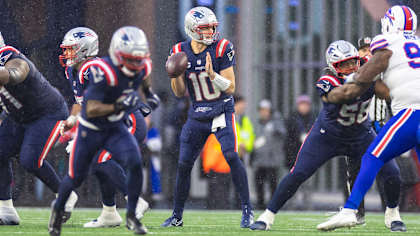
In the locker room, the mood was heavy. Losses to Buffalo always carried extra sting, but this one felt particularly cruel. Players spoke in hushed tones. The clatter of equipment echoed against concrete walls.
Jones sat at his stall long after most reporters had moved on. When he finally addressed the media, his composure faltered. His voice cracked as he described the moment of the call, his eyes filling as he tried to explain how it felt to be singled out under such a bright spotlight.
He wasn’t arguing the rules. He wasn’t accusing officials of bias. What hurt, he said, was the feeling of letting people down.
“My teammates trust me,” Jones said. “The coaches trust me. When that flag came out, it felt like I’d failed all of them at once.”
Veteran players nearby nodded quietly. They understood. Every defensive back knows the thin line they walk—aggression balanced against restraint, milliseconds determining whether a play is celebrated or condemned.
The anatomy of a controversial penalty
Pass interference has long been one of the most debated calls in football. The rule is inherently subjective, asking officials to judge intent, timing, and impact in real time, often from imperfect angles.

League-wide data shows that defensive pass interference penalties can swing games more dramatically than almost any other call. They erase incomplete passes, grant automatic first downs, and, in many cases, place the ball deep in scoring territory.
Former officials often describe it as the hardest call to make consistently. What looks incidental at one speed can appear decisive at another. What one crew flags, another might let go.
On Sunday, that subjectivity was laid bare.
Social media lit up within minutes. Clips circulated with captions questioning the decision. Analysts on postgame shows slowed the play down, debating whether Jones’ contact truly impeded the receiver’s ability to catch the ball.
Opinions split sharply. Some argued that Jones’ arm clearly restricted movement. Others insisted the receiver initiated contact and that the ball was uncatchable anyway.
Lost in the noise was the human reality of the player at the center of it all.
A career defined by versatility
Marcus Jones has never fit neatly into a single box. Drafted for his speed and instincts, he quickly became known for his ability to impact games in multiple ways—cornerback, return specialist, occasional offensive contributor.
That versatility, while celebrated, comes with pressure. Mistakes feel magnified. When you’re involved in so many phases of the game, you carry more opportunities to be blamed when things go wrong.
Coaches have often praised Jones for his mental toughness. He studies film obsessively. He asks questions. He takes responsibility when things don’t go as planned.
That mindset was evident even in his pain.
“I’m going to look at it,” he said of the play. “I’m going to learn from it. That’s the only thing I can do.”
Teammates rally
Inside the locker room, support came quickly. Defensive captain voices rose in Jones’ defense, emphasizing that no single play defines a game.
One veteran lineman put it bluntly: “We all had chances to make plays earlier. It’s not on him.”
The head coach echoed that sentiment in his postgame remarks, careful to strike a balance between accountability and protection.
“We win as a team, we lose as a team,” he said. “That’s not just a slogan. It’s real.”
Privately, several players said they admired Jones for speaking openly about his emotions. In a league that often prizes stoicism, vulnerability can feel risky. But it also builds trust.
Fans and fallout
For fans, the call reopened familiar wounds. Years of close losses, disputed decisions, and what-ifs have left scars. Sunday added another chapter.
Talk radio lines filled with callers dissecting the play. Some demanded accountability from officials. Others turned their frustration inward, criticizing the defense for putting itself in that position late in the game.
A few voices cut through the anger, reminding listeners that Jones is a young player navigating immense pressure.
“He cares,” one caller said. “You could see it. That matters.”
The mental toll of the position
Looking forward
As the Patriots move on to the next week, the loss will be dissected, then shelved. The league doesn’t pause for reflection. Schedules march on.
Jones knows that. He said he planned to take Sunday night to sit with the disappointment, then return to work.
“You don’t get to stop,” he said. “You just have to get better.”
Coaches indicated they would continue to trust him in critical situations. His role is not changing. His responsibilities remain.
That trust may be the most important thing of all.
The forest, revisited
In that earlier image—the stranger in the forest, facing a silent, unknowable presence—the encounter ended not with violence, but with understanding. The stranger realized the creature was not there to harm him. It was there to reflect something back: fear, humility, perspective.
Jones’ moment on Sunday may serve a similar purpose. Painful as it was, it revealed the depth of his commitment, the weight he feels carrying his team’s expectations.