Rangers Trade for Merrill Kelly Now Looks Like a Failure on Multiple Levels
At the time, it felt reasonable. Sensible, even. The Texas Rangers, staring down a season filled with urgency and expectation, made a move they believed would steady the ship. They traded for Merrill Kelly — a veteran arm, a known quantity, someone who looked like he could absorb pressure and innings without blinking. On paper, it made sense. In reality, it has slowly unraveled into something far more uncomfortable.
Because now, with hindsight creeping in and the dust long settled, that trade looks less like a calculated step forward and more like a stumble — one that has failed on multiple levels.

Kelly was supposed to be reliability. That was the pitch. A pitcher who knew how to survive lineups, who wouldn’t melt under bright lights, who could give the Rangers exactly what they needed when things got tight. But baseball doesn’t always reward intention. It rewards results, timing, and health — and Texas hasn’t gotten enough of any three.
His performances never quite synced with the urgency of the moment. Some starts were serviceable, others forgettable, and a few outright damaging. The consistency the Rangers hoped for never arrived, and in a rotation that needed clarity, Kelly became another question mark. Not disastrous enough to write off, but not impactful enough to justify the cost.
And that’s where the cracks deepen.
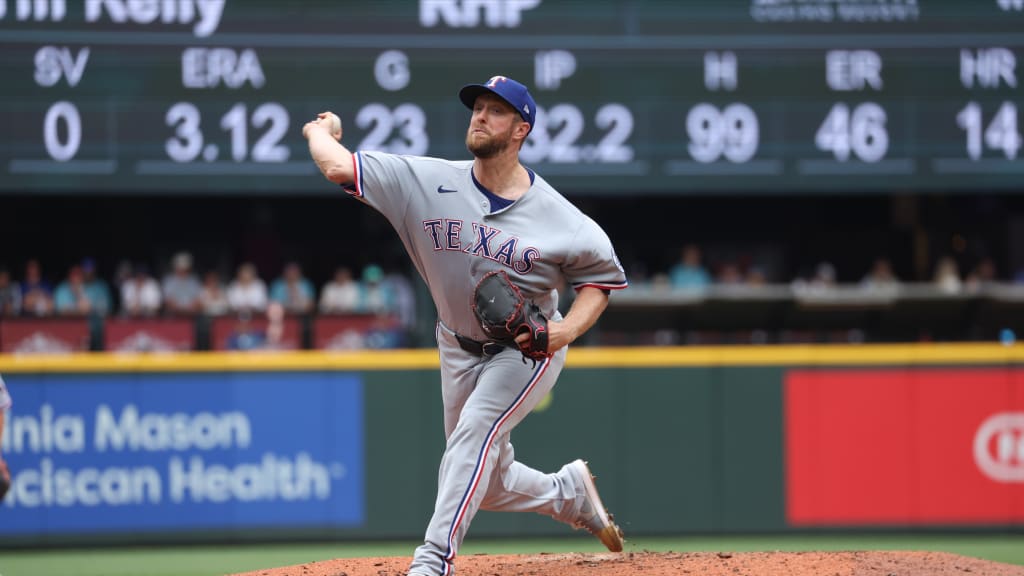
Because this trade wasn’t just about Kelly. It was about what the Rangers gave up to get him. Prospects who represented future flexibility. Pieces that could have been packaged differently. Assets that might have helped the club address other needs — bullpen depth, lineup balance, long-term pitching upside. Instead, those resources were locked into a move that produced diminishing returns almost immediately.
That’s the first level of failure: performance versus expectation.
The second is timing.
Texas made the move as if they were one piece away, as if the foundation beneath them was sturdier than it actually was. But the season exposed flaws everywhere — not just in the rotation. Injuries piled up. The bullpen wobbled. The offense sputtered at the worst moments. Kelly wasn’t arriving to complete a puzzle; he was arriving to a picture that hadn’t been fully sketched yet.

In that context, the trade feels premature. A move made out of pressure rather than clarity. And pressure has a way of distorting judgment.
The third level is emotional — and this one stings the most.
Rangers fans weren’t asking for a safe move. They were asking for a bold one. A swing that matched the ambition of a franchise trying to sustain relevance. Instead, the Kelly trade landed with a dull thud. It didn’t ignite belief. It didn’t energize the clubhouse. It didn’t feel like a statement.
It felt like settling.
And settling is dangerous for a team that just tasted success and wants more.
Inside the clubhouse, moves like this are felt even if they’re never spoken aloud. Players know when help is coming. They also know when help arrives carrying expectations it may not be able to meet. That subtle tension — the waiting, the hoping, the quiet disappointment — can erode confidence faster than a blowout loss.

Kelly never became a stabilizer. He became a symbol of uncertainty.
And finally, there’s the long-term consequence. Trades don’t end when the season does. They echo into future years, shaping flexibility and limiting options. Every roster decision exists in the shadow of the one before it, and this trade now sits there — a reminder of what might have been done differently.
None of this makes Merrill Kelly the villain. Baseball isn’t that simple. He showed up, competed, and took the mound when asked. The failure isn’t personal. It’s structural. It’s philosophical. It’s about a front office misreading its own moment.
The Rangers wanted certainty.
They got ambiguity.
They wanted stability.
They got another variable.
They wanted progress.
They got a lesson.
And maybe that’s the only silver lining here. Because franchises don’t grow by ignoring their mistakes — they grow by owning them. The Kelly trade now stands as a quiet warning, one written not in headlines but in outcomes.
Sometimes the moves that look safest are the ones that cost you the most.