Sawyer is different. Bigger frame, longer arms, a more classic edge silhouette. His game is power-forward aggression mixed with discipline. He sets the edge like it owes him money. When he rushes, it’s with a plan, and when the plan fails, he resets without panic.
The Steelers did not draft Sawyer to be Watt. They drafted him to be himself. That distinction matters. The worst thing you can ask a young edge rusher to do is imitate a generational one. The best thing is to give him permission to contribute honestly.
Together, Herbig and Sawyer represent the Steelers’ answer to an unanswerable question. Not one replacement, but a committee of intent. Pressure by accumulation. Disruption by design.
The timeline of their ascension has not been smooth. There have been games where protections swallowed them. Drives where quarterbacks stood too clean. Film sessions that lingered on missed contain or a half-second late on a stunt. The NFL is merciless that way.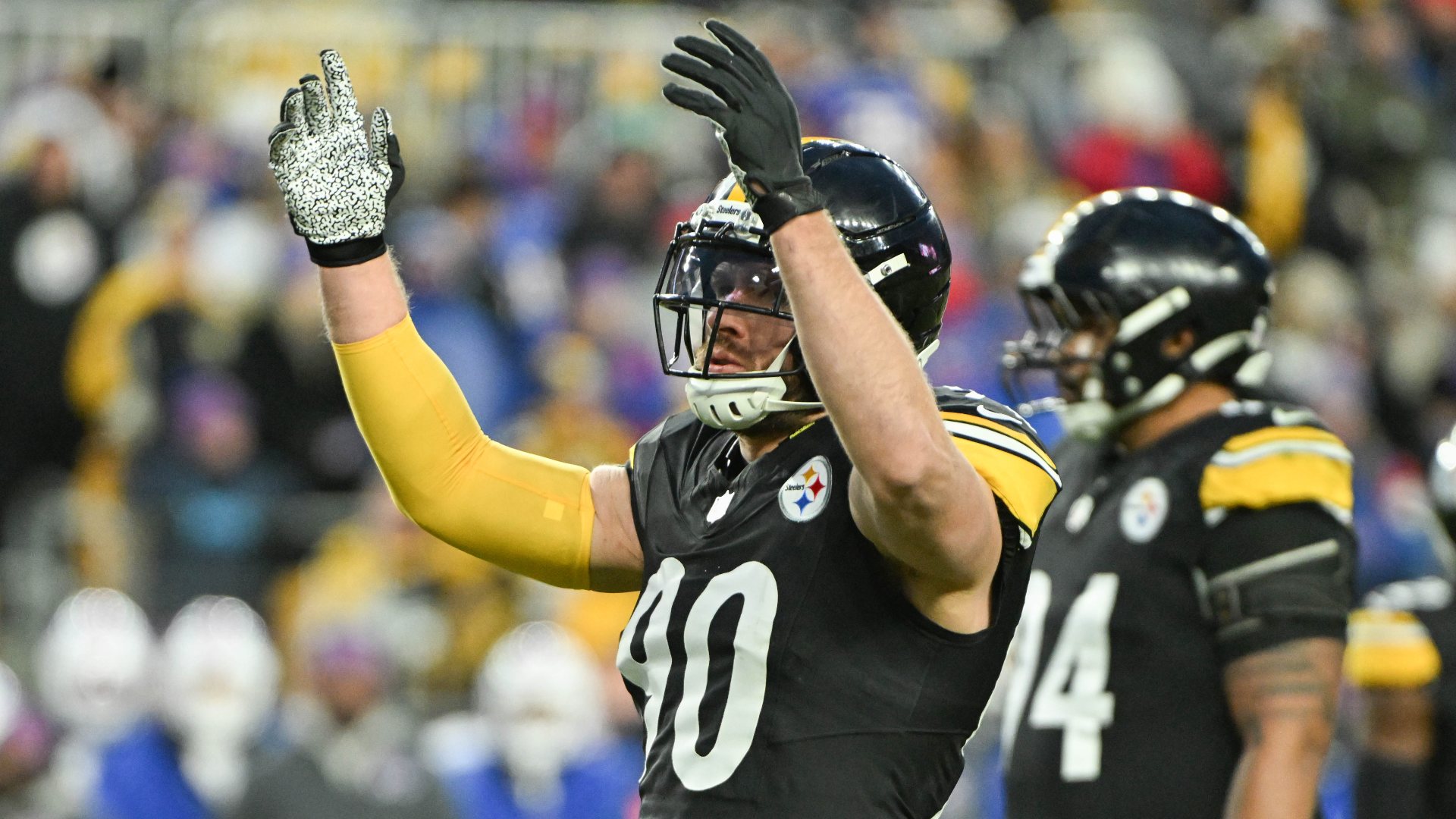
But there have also been moments. Herbig bending under a tackle’s punch and forcing a throw off-platform. Sawyer collapsing a pocket and freeing a teammate. Plays that didn’t make highlights but shifted series. Those moments are how belief becomes structure.
Fans have felt the tension. In Pittsburgh, defensive lineage is not nostalgia—it’s inheritance. Mean Joe Greene. Jack Lambert. Troy Polamalu. T.J. Watt. Each name is a standard, not a story. Social media swings between patience and panic, between trust in the crest and fear of erosion.
Former players have weighed in with a familiar mix of empathy and honesty. “You don’t replace a Watt,” one said. “You survive him being gone.” That sentiment has echoed through the locker room.
An Absence That Feels Physical
When Watt is on the field, the Steelers’ defense doesn’t just play fast—it plays hungry. Linemen explode off the snap as if pulled by gravity. Linebackers cheat forward, trusting chaos will arrive on schedule. Defensive backs sit on routes with the confidence of people who know the quarterback won’t have time to breathe.
When Watt isn’t there, the geometry of the game shifts.
Offensive tackles stand a little taller. Quarterbacks glance downfield a fraction longer. Running backs hesitate, unsure whether the gap in front of them is real or a trap. The margins grow wider. The fear thins out.
You don’t replace that.!role~Preview!mt~photo!fmt~JPEG%20Baseline)
You can only respond to it.
That’s the quiet truth inside the Steelers’ facility right now. There is no plan that pretends otherwise. No script that imagines a seamless handoff of dominance. Instead, there is something far more human—and far more volatile—taking shape.
Nick Herbig. Jack Sawyer.
Two names spoken with caution, hope, and just enough disbelief to make it dangerous.
The Weight of Inheritance
The first thing you notice about Herbig is the way he moves before the snap. There’s an impatience there, a coiled energy that refuses to stay still. His stance is slightly lower than most, his hands twitching as if reacting to something only he can see. He doesn’t look like a man trying to replace someone. He looks like a man trying to survive the moment.
Sawyer, by contrast, carries himself differently. Broader shoulders. Slower steps. A gaze that doesn’t dart, but settles. When he lines up, there’s a stillness that almost feels defiant, as if he’s daring the play to unfold exactly as planned.
Together, they represent two different responses to the same impossible question.
What do you do when the shadow is larger than the field?
Inside the locker room, no one calls it a competition. That would be dishonest. This isn’t about winning a job. It’s about absorbing responsibility. About stepping into a role that doesn’t just demand production, but presence.
The veterans know it. They watch closely during walkthroughs. They listen for the sound of pads colliding in drills. They notice who finishes reps and who fades. Leadership on defense isn’t assigned—it’s recognized.
And recognition, in Pittsburgh, is ruthless.
Practice Tells the Truth
There’s a moment in every practice when the noise drops. Coaches stop shouting. Teammates stop chirping. The crowd beyond the fence leans in.
It happens during pass-rush reps.
The ball is snapped. The offensive lineman sets his feet. For a heartbeat, everything hangs in balance.
Herbig wins with speed. When he times it right, the edge disappears. His shoulder slips through space that shouldn’t exist, and suddenly the quarterback has to reset, to move, to abandon the read. It’s not dominance yet—but it’s disruption. And disruption is contagious.
Sawyer wins differently. He doesn’t vanish. He arrives. His hands land heavy, his leverage relentless. He forces the pocket to collapse not with flash, but with pressure that feels inevitable. Quarterbacks don’t panic—they resign themselves.
The defense reacts to both in different ways.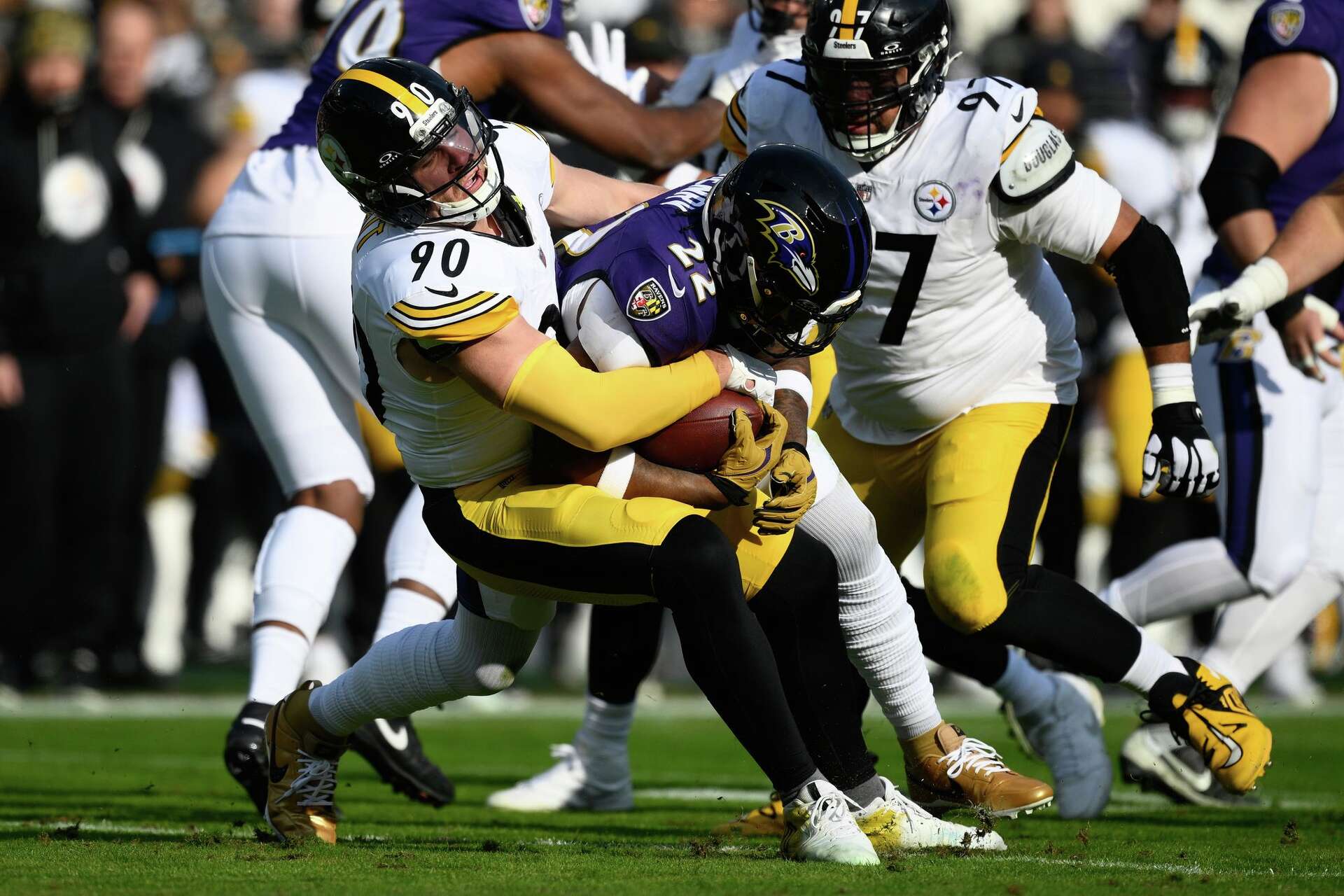
When Herbig breaks through, there’s an audible reaction. A burst of energy. Shouts, claps, helmets tapping in approval.
When Sawyer caves the edge, there’s a nod. A quiet acknowledgment. The kind that says, that’ll play.
Neither reaction is wrong. Neither is enough on its own.
The Ghost in the Formation
Every time the defense lines up, there’s an empty space that feels occupied. An expectation that hasn’t left with the player it belongs to.
Opposing offenses still build protections around it. Slide calls still cheat that direction. Tight ends still hesitate before releasing, half-expecting impact.
Watt himself has been present without performing. He watches practice from angles that matter. He speaks when asked, and sometimes when not. His mentorship is not theatrical. It is surgical. A hand placement here. A timing note there. He understands what it means to be the forest’s creature—felt more than seen.
The Steelers’ coaches have adjusted schematically. More simulated pressures. More late rotations. More trust in coverage to buy half a beat. It is chess without the queen, and the board feels wider for it.
Herbig has benefited from that complexity. His feel for space allows him to loop and counter within chaos. Sawyer has thrived in defined roles, where his strength can anchor and free others. Neither has been perfect. Both have been necessary.
There is a human dimension to this transition that statistics miss. The weight of being next. The quiet of a locker room after a loss when Watt’s locker remains occupied but unused. The way younger players glance over, as if expecting gravity to return.
In interviews, Herbig speaks about responsibility without romance. Sawyer talks about preparation without bravado. Neither promises to fill shoes. They promise to run.
The Steelers’ front office has been candid. Watt is a cornerstone. His health dictates ceilings. But the league does not pause, and windows do not widen on sympathy. Depth is not a luxury; it is a requirement.
As the season has unfolded, the defense has begun to show a different shape. Less singular terror, more collective abrasion. Quarterbacks still get hit. Routes still get disrupted. It looks different, but it works enough to keep games within reach.
That “enough” is the pivot point. Pittsburgh has built a culture on sufficiency turning into dominance. The hope is not that Herbig or Sawyer becomes Watt. The hope is that together, with scheme and belief, they make absence survivable.
Late in games, when legs are heavy and reads slow, Watt’s shadow stretches longest. That’s when the difference between fear and respect shows itself. Opponents test edges they would never test otherwise. That’s when Herbig and Sawyer are asked to answer.
Sometimes they do. Sometimes they don’t. That’s football.
In the quiet after a hard-fought win, Sawyer once described the defense as “loud without shouting.” It was an odd phrase, but it fit. The Steelers are learning to make noise without their loudest instrument.
The future is uncertain in the way all seasons are. Watt will return when he returns. The Steelers will be better for it. But they will also be changed. Herbig and Sawyer will not give back the responsibility they’ve carried. They will add it to what they become.