The Bears now hold the top spot in the NFC North—a place many predicted they would not reach this season. And they have taken that position not by accident, not by luck, but through a stretch of football defined by resilience, structure, and a growing confidence that the team’s long-awaited identity is finally taking shape.
The Packers’ Collapse Opens a Door Chicago Was Ready to Walk Through
For weeks, the NFC North race had been tightening like a noose. The Packers, once surging behind an improved offense and an unexpectedly stable midseason stretch, entered Week 15 as slight favorites to maintain divisional momentum. Their opponents were battered, inconsistent, and widely regarded as outmatched. Everything suggested Green Bay would extend its climb and keep Chicago at arm’s length.
But the NFL rarely follows expectations. And in Week 15, the Packers stumbled violently.
Turnovers derailed drives. Defensive breakdowns surfaced at the worst possible moments. Coaching decisions, once celebrated for boldness, morphed into liabilities. Time management blunders added layers of frustration. And most critically, the team’s emotional stability cracked under pressure.
By the fourth quarter, the game had spiraled. Fans watched in disbelief as Green Bay surrendered opportunities, lost control of the clock, and opened the door for Chicago to seize a division it had not led this late in the season for years. When the final whistle sounded, the Packers’ loss felt seismic—not just for them, but for the entire division.
Chicago didn’t stumble into first place. The opening was created by Green Bay’s collapse, but capitalized on by a Bears team that had quietly built momentum and sharpened its execution with every passing week.
The Bears’ Rise: A Story of Resilience and Identity Taking Shape
Chicago did not begin the season as favorites—not in the division, not in the conference, and not even among neutral analysts. Their roster was young, their quarterback was transitioning into leadership, and their coaching staff was navigating the intricacies of implementing a system designed to maximize explosiveness while minimizing turnover risk.
But as the season progressed, something unusual happened: the Bears began to grow. They grew in discipline. They grew in cohesion. They grew in responsiveness to adversity. Week after week, Chicago learned how to close games, stack drives, assert defensive pressure, and create rhythm on offense that had been absent for years.
Their rise back to first place is a direct reflection of that growth.
Key veterans found renewed purpose. Young playmakers elevated their roles. The coaching staff refined its situational intelligence. And Caleb Williams—unquestionably the centerpiece of the franchise’s transformation—began to demonstrate command and composure that belied his youth.
The Bears’ identity is no longer theoretical. It is forming in real time.
Caleb Williams: The Catalyst Behind Chicago’s Climb
Every division leader needs a reason—an engine capable of propelling the team through turbulence and elevating them in high-pressure moments. For Chicago, that engine is Caleb Williams.
Williams’ development has been the single most influential factor in the Bears’ return to first place. His poise under pressure, controlled aggression, pocket movement, and deep-ball precision have reshaped the offense’s dynamics. He’s not simply making plays; he’s dictating games.
Multiple division rivals have publicly acknowledged that Williams changes the way they prepare for Chicago. His improvisational ability forces defenses to hold coverage longer. His off-script brilliance punishes overzealous blitzes. His anticipation and velocity neutralize tight windows.
Williams has become the kind of quarterback Chicago has spent decades searching for—one capable of lifting the entire organization.
And now, he is leading them into first place.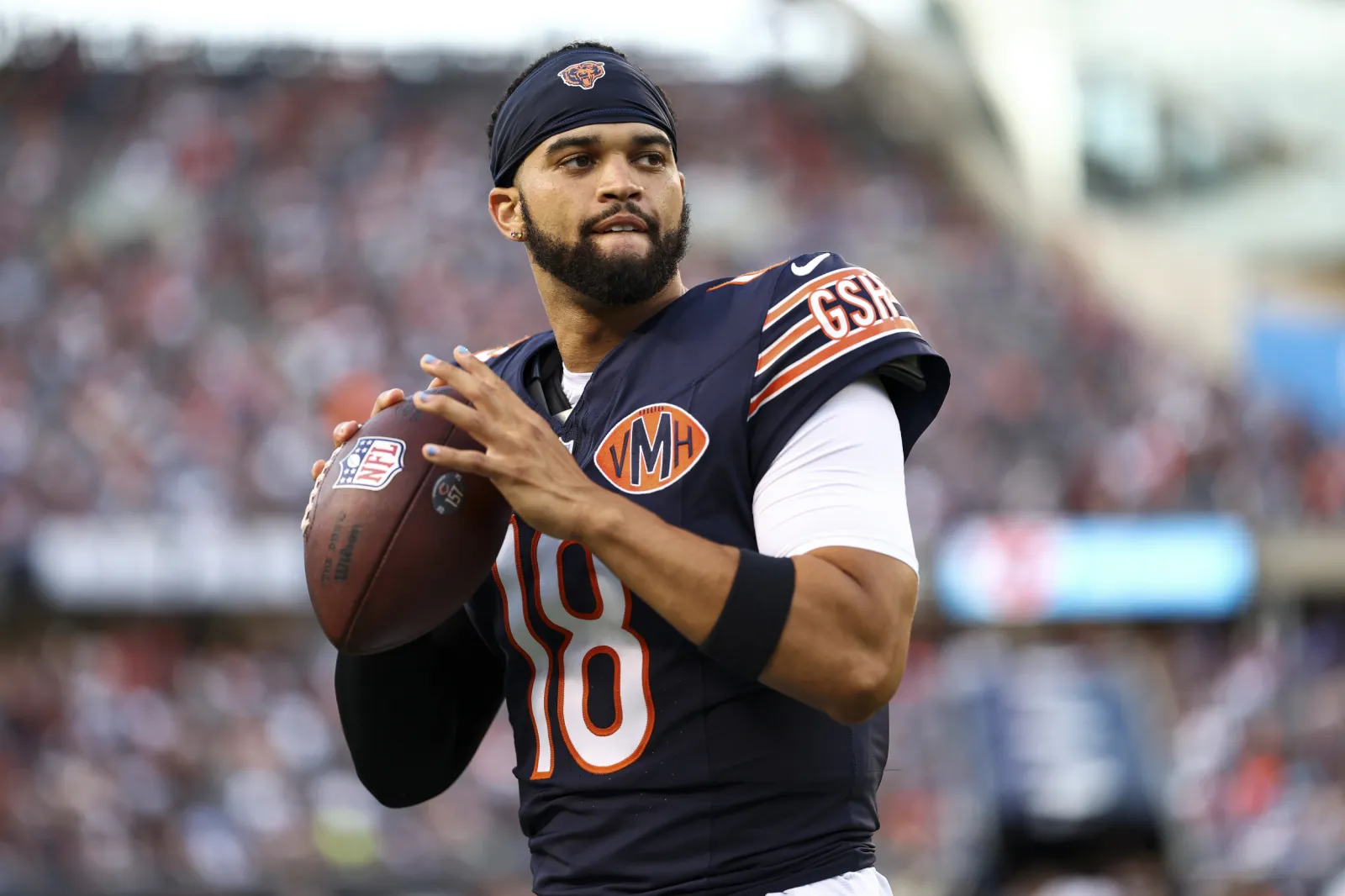
Chicago’s Defense: The Foundation of a Contender
While Williams leads the narrative, Chicago’s defensive transformation deserves equal recognition. They have become disciplined, physical, opportunistic, and relentless.
The secondary has improved its communication. The front seven has tightened its run fits and become a nightmare for inconsistent offensive lines. Chicago’s pass rush has developed a synergy between interior pressure and edge disruption that forces quarterbacks into mistakes.
In the past month alone, the defense has forced turnovers in critical moments, dominated time-of-possession battles, and prevented explosive plays that once plagued their identity.
The Bears are back in first place not just because of Williams, but because their defense has matured into a unit that can dictate game flow.