⚡ LATEST UPDATE: Orioles Payroll Trends Under Mike Elias and David Rubenstein Paint a Revealing Picture of Baltimore’s Long-Term Roster Strategy ⚡

The Baltimore Orioles, once baseball’s ultimate success story built on thrift and a revolutionary farm system under General Manager Mike Elias, are now entering a fascinating new chapter. The recent acquisition of the club by owner David Rubenstein has acted as a catalyst, fundamentally reshaping the team’s approach to the financial side of roster construction. Examining the payroll trends under Elias’s rebuilding process juxtaposed with the initial impact of the Rubenstein era provides a clear, and arguably overdue, look at Baltimore’s long-term strategy: one that is transitioning from pure prospect accumulation to targeted, high-value competitive spending.
The Elias Era: From Sub-$100 Million to Sustainable Growth
For years, the Orioles’ payroll was notoriously lean, a deliberate and necessary consequence of Elias’s “process.” From 2021 to 2023, the team’s opening-day payroll hovered near the bottom of Major League Baseball, dipping as low as a startling $43.7 million in 2022. This extreme financial discipline allowed the Orioles to hoard high-value draft picks, secure significant international bonuses, and maximize the window of control for elite, homegrown talent like Adley Rutschman, Gunnar Henderson, and Grayson Rodriguez. The low payroll was not a sign of frugality for its own sake, but rather a strategic tool to build a robust, cost-controlled core. The team’s success in 2023, achieving a 101-win season with one of the league’s lowest payrolls, was the ultimate validation of this method.
However, the strategy was always contingent on a “liftoff” moment. That moment arrived as the young core matured, necessitating greater expenditure to supplement them. The 2024 season saw the payroll begin its ascent, climbing well over $100 million through targeted acquisitions like trading for Corbin Burnes and signing key free agents. This marked the end of the austerity phase and the start of competitive spending.
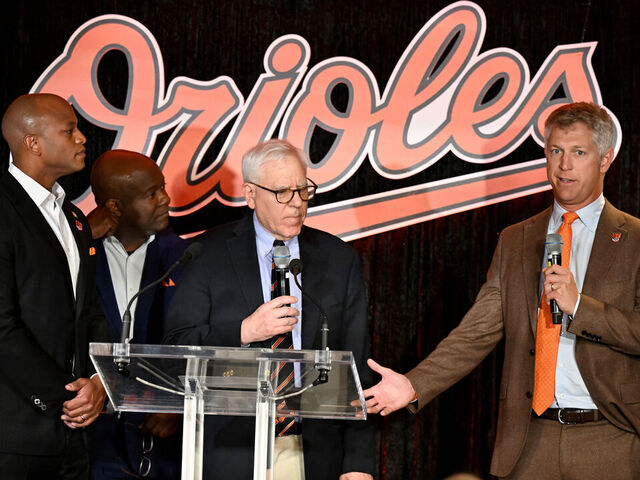
The Rubenstein Effect: Removing the Financial Ceiling
The real game-changer is the arrival of David Rubenstein. The principal owner’s public comments have consistently stressed that the Orioles “don’t have financial constraints” and are prepared to acquire the necessary talent. This sentiment has quickly translated into action, pushing the payroll up significantly, with projections easily surpassing the $150 million mark and approaching franchise-record levels. This drastic shift signals the death of the “small-market” mentality that previously defined the franchise.
Rubenstein’s wealth and willingness to spend immediately impact the long-term roster strategy. Where Elias might have previously balked at a long-term, high-AAV contract for a necessary piece—particularly in the pitching department, where the farm system has been less fruitful—the financial restraints are now gone. The strategy is no longer about if they will spend, but how and where they will spend to maximize their competitive window.
A New Long-Term Strategy: Targeting Needs and Sustaining Success
The current payroll trajectory reveals a strategic intent to transition from a “rebuilding” club to a sustained contender. The strategy has three key pillars:
-
Retention: Locking up core, homegrown players like Rutschman and Henderson to long-term extensions before they hit free agency, guaranteeing a championship-caliber team for the next decade.
-
External Augmentation: Aggressively pursuing high-caliber, established talent (especially pitching) in free agency and trades to fill the holes that the farm system, however brilliant, cannot fill immediately. This includes signing players to multi-year deals that will further inflate the payroll in the coming seasons.
-
Flexibility and Trade Capital: The sheer depth of the farm system still allows Elias to trade elite prospects for established veterans, a move that is less painful when a massive financial commitment is no longer the sole avenue for acquiring talent.
In conclusion, the Orioles’ payroll trend is a clear, visual representation of a completed rebuild and a major power shift. Under Mike Elias, the strategy was to build the foundation with cost-controlled talent. Under David Rubenstein, the strategy is to install the roof and furnish the interior with high-end, free-agent capital. The combined forces promise to make the Orioles one of the most financially flexible and formidable teams in baseball for the foreseeable future.