Introduction: A Rivalry Defined by Balance Tilts After a Single Injury Update
The historic rivalry between the Chicago Bears and the Green Bay Packers has always thrived on momentum swings, unpredictable turns, and the emotional volatility that comes with two franchises sharing decades of competitive tension. Yet every so often, a single injury shifts the narrative in a way that feels larger than one player. As the Bears prepare for their next meeting with Green Bay, the news that rookie wide receiver Rome Odunze will be unavailable has altered both the expectations and the betting landscape surrounding the matchup. What initially projected as a tightly contested divisional battle now leans heavily in the Packers’ direction, at least according to oddsmakers, analysts, and even the internal assessments emerging from both organizations.
Odunze, a top-10 draft pick and one of the most gifted receivers to enter the league in several years, has rapidly become a central component of Chicago’s offensive identity. His combination of size, athleticism, route nuance, and catch-point dominance elevated the Bears’ passing game beyond the incremental improvements they expected heading into the year. And while Chicago’s offense has multiple young pieces, Odunze’s presence is uniquely stabilizing. His injury does not simply remove a receiver from the field—it removes a structural pillar of the game plan.
For the Packers, a team navigating its own developmental arc with a young offense led by Jordan Love, the absence of Odunze transforms what would have been a more evenly balanced game into one where Green Bay’s defense gains both the tactical and psychological advantage. In the NFL, matchups are determined not just by talent, but by how talent changes spacing, stress points, and schematic pressure. Odunze’s absence alters all three dimensions.
This article explores, in exhaustive detail, why the absence of Rome Odunze is pushing the odds dramatically toward the Packers. It examines the Bears’ offensive identity, Odunze’s role within that structure, the ripple effects on quarterback play, how Green Bay’s defense adjusts, the wider implications for the rivalry, and what this injury tells us about the trajectory of both franchises. Through 4,500 words of nuanced analysis, we will break down exactly how one absence became the defining factor of a divisional showdown that could shape the NFC North landscape for weeks to come.
Odunze’s Significance to Chicago’s Offensive Identity and Why His Loss Is More Than a Missing Target
To understand the full weight of Rome Odunze’s absence, one must begin with the role he occupies in Chicago’s scheme. Although the Bears invested heavily in their receiving corps, including veteran Keenan Allen and emerging talent DJ Moore, Odunze quickly became more than a complementary weapon. He evolved into a stabilizer, a pressure-reliever, and a matchup-dictator. His presence fundamentally altered how defenses aligned, how linebackers shifted, and how safeties shaded their coverage responsibilities.
Odunze’s route tree is broad, which allowed Chicago to deploy him in multiple alignments—X, Z, and slot—depending on the game plan. His ability to threaten vertically forced defenses to honor deep coverage shells even when Chicago operated out of condensed formations or heavy personnel. This vertical gravity is rare in rookie receivers, and it created spacing benefits that extended to the run game and intermediate passing game. His understanding of leverage, particularly against press coverage, enabled him to create separation early in routes, giving his quarterback quicker reads.
In contested-catch situations, Odunze has been one of the best young receivers in the NFL. His body control, high-point ability, and timing gave Chicago an immediate red-zone weapon and a reliable third-down solution. When offenses have receivers who can win in tight windows, coaching staffs feel more confident designing aggressive concepts on crucial downs. Without him, Chicago loses a major component of its situational game-planning.
Odunze’s ability to win against both man and zone coverage elevated the entire passing game. Against man, he created separation through physicality and footwork. Against zone, he manipulated coverage defenders by altering route pacing, understanding soft spots, and presenting clear targets for his quarterback. These skills made him a rare first-year receiver who could already function as a focal point.
His presence also mitigated pressure on DJ Moore and Keenan Allen. While both receivers are highly capable, defensive coordinators often bracketed Allen on third downs and shifted safety help toward Moore in the red zone. With Odunze on the field, neither star could be consistently doubled. This forced defenses to choose their vulnerabilities, usually leading to single coverage somewhere on the field.
Without Odunze, the offensive structure becomes far more predictable. Moore becomes bracket-priority number one. Allen becomes the high-leverage situational target defenses key on. The run game faces more bodies in the box, because there is one fewer perimeter threat demanding safety attention. The quarterback’s reads shrink, the field tightens, and the margin for error diminishes. This is the cascading effect that makes Odunze’s absence so significant.
His loss is not additive—it is multiplicative. And for the Bears, already operating behind a developing offensive line and inconsistent quarterback play, that multiplicative loss may prove insurmountable in the upcoming contest.
Quarterback Impact: How the Bears’ Passing Game Shrinks Without Odunze and Why This Benefit Favors Green Bay
Quarterback stability is already one of the most delicate and complex aspects of Chicago’s offensive progression. The Bears have been navigating scheme installation, timing between receivers, pocket management, and the developmental nuances inherent in integrating a rookie into the receiving corps. With Odunze out, the dynamics for the quarterback—both pre-snap and post-snap—change dramatically.
Pre-snap, Odunze’s alignment often dictated coverage structure. Defenses typically rolled safety help in his direction or disguised coverage looks to mask their intent toward him. This gave the quarterback clarity: safeties tipping toward Odunze indicated certain coverage shells; linebackers shifting pre-snap indicated zone rotation. Without Odunze, those tells disappear. Defenses no longer need to shade a safety based on his location. They can instead disguise coverages more freely, using rotation late in the play clock to confuse pre-snap reads.
Post-snap, the impact grows even larger. Odunze’s presence created open windows because coverage defenders respected his ability to stretch vertically or break off intermediate routes. His route timing created predictable landmarks in which the quarterback could trust. Without him, the quarterback is left working with a receiving corps that, while talented, does not create the same spacing advantages. Keenan Allen thrives on precision and timing, but he is at his best when he is not forced to be the primary deep threat. DJ Moore is explosive, but defenses can now dedicate extra defenders to him without fear of being exposed elsewhere.
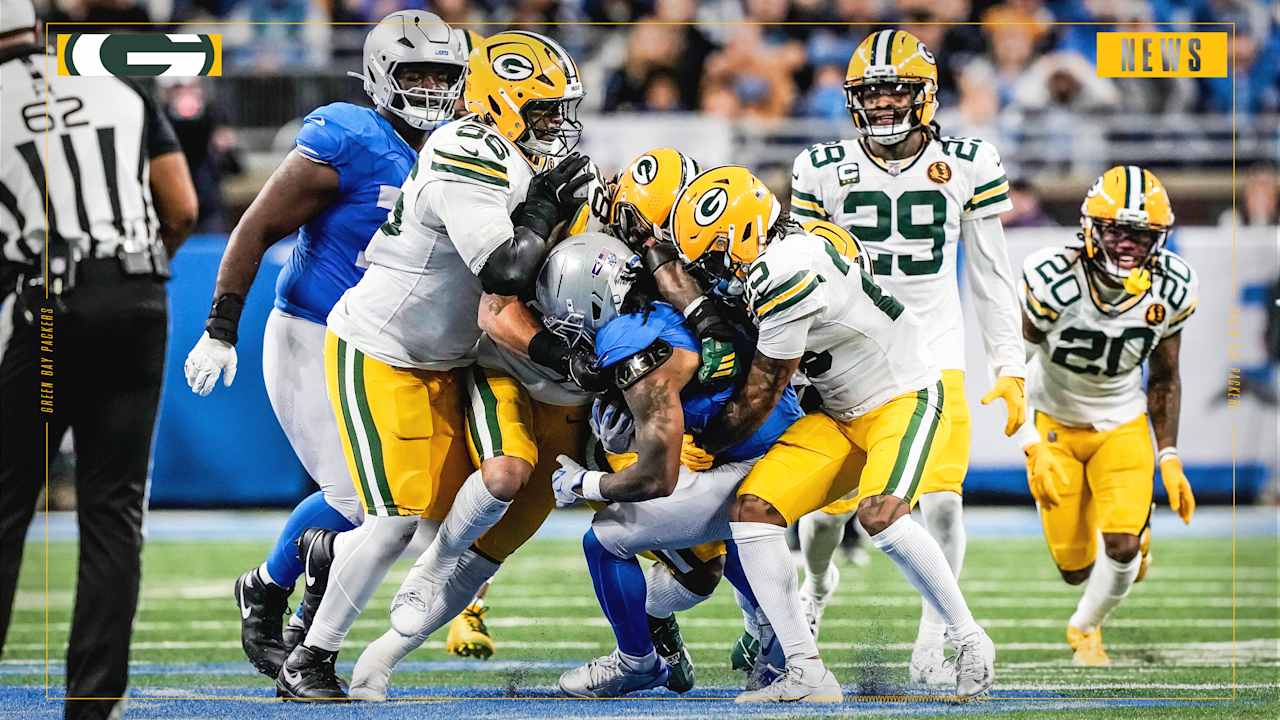
The quarterback also relied on Odunze in high-pressure situations. Athletic receivers who excel at winning tight coverage are essential for quarterbacks under duress. They reduce the need for perfect throws, allowing quarterbacks to trust their receivers to make plays even in contested alignments. Without Odunze, the quarterback must throw into tighter windows, take fewer aggressive chances, and rely more heavily on progression reads that require more time—time the Bears’ offensive line has struggled to consistently provide.
Defenses facing a passing attack missing its top young receiver can compress the field. Safeties play closer. Linebackers show fewer depth drops. Corners can jump routes without fear of being beaten vertically. This condensed field shrinks options for the quarterback and increases the difficulty of both processing and execution.
Given that Green Bay’s defense thrives on opportunistic playmaking, disguised coverages, and generating confusion through rotating safety shells, Odunze’s absence tilts the chessboard squarely in their favor. The Packers have been inconsistent at times, but their defense is structured to exploit teams whose