Before evaluating the weaknesses of Philadelphia’s upcoming opponents, it is essential to understand where the Eagles themselves stand. The defense, long celebrated for its strength in the trenches and rotational depth, has experienced stretches of inconsistency. Injuries have impacted the secondary. Coverage miscommunications have surfaced more frequently than expected. The pass rush, though still imposing, has not always translated pressure into disruption at the level the coaching staff demands. And while individual performances have been strong at times, collective execution has fluctuated.
The defensive line, the centerpiece of Philadelphia’s identity, remains populated by elite talent. Jalen Carter is widely viewed as one of the NFL’s most dominant young interior defenders. Jordan Davis continues to evolve as a run defender and gap-eating force. Veterans such as Fletcher Cox and Brandon Graham offer leadership and situ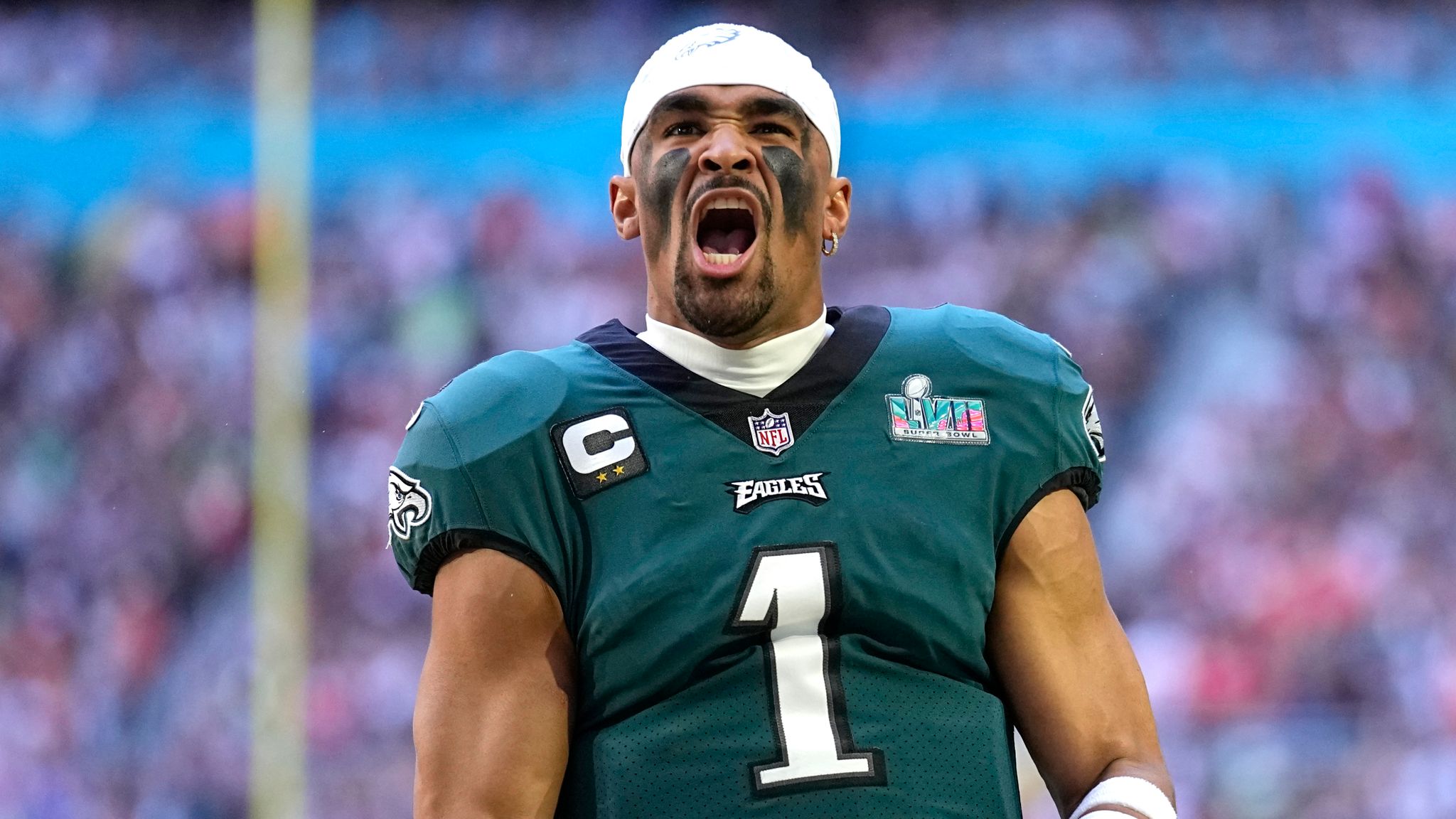 ational burst. The combination of Haason Reddick (before his departure), Josh Sweat, Nolan Smith, and other rotational rushers gives the Eagles one of the deepest edge rooms in the league.
Yet despite this depth, the defense has lacked consistency in three critical areas. The first is interior gap integrity. Opponents who commit to wide-zone concepts or misdirection have occasionally found seams that force the linebackers to recover out of structure. The second is third-down execution. Too often, the defense generates early pressure on first and second down only to yield manageable conversions in key moments. And the third is coverage synergy, where the back end has been inconsistent in complementing the front end’s pressure.
These issues have created frustration within the fan base and introspection within the coaching staff. But they are also fixable—especially with the right matchups. Facing subpar offensive lines forces opponents into predictable protection schemes, reduces offensive creativity, limits pocket movement, and helps the Eagles’ front seven dictate terms rather than react.
More importantly, dominant trench matchups can help the Eagles regain something that is both intangible and essential: swagger. A defense that forces negative plays, pressures quarterbacks into hurried decisions, and collapses run concepts consistently reestablishes its confidence quickly. If Philadelphia leverages the next two weeks correctly, this period could become the bridge to a stronger second half of the season.
Opponent One: A Deep Analysis of the First Offensive Line Philadelphia Will Face and Why It Is Ranked at the Bottom of the NFL
Philadelphia’s first upcoming opponent suffers from one of the most alarming offensive line performances in the league. Their struggles are multi-layered, stemming from injuries, inexperience, structural flaws in protection schemes, and individual mismatches. Film analysis shows frequent failures in communication, poor anchor strength against bull rushes, inconsistent recognition of stunts, and a chronic inability to sustain blocks in the run game.
The left side of the offensive line has been unstable due to repeated injuries. The tackle position, which anchors blind-side protection, has surrendered pressures at a rate well above league average. Edge defenders have found success with both speed rushes and inside counters, exploiting slow lateral movement and inconsistent hand placement. Guard play has been equally problematic, with losses in leverage battles and susceptibility to interior twists.
The interior protection—center and both guards—has been the root of the offense’s collapse. Philadelphia’s defense thrives on interior disruption, and this opponent has been unable to prevent defenders from collapsing the pocket. Quarterbacks have been forced into hurried throws, leading to elevated turnover risk, reduced accuracy, and stalled drives. Additionally, the run game has suffered significantly. A lack of push up front has created predictable down-and-distance situations and limited the playbook.
The right tackle position, typically the strength of the line in many offenses, has been inconsistent at best and overpowered at worst. Opposing defenses have attacked this weakness with wide-nine alignments and quick edge pressure, forcing the offense to keep tight ends or running backs in for help. This limits route combinations and reduces explosive potential.
This opponent’s offensive line ranks near the bottom in pass-block win rate and run-block efficiency. The film does not merely show a struggling line—it shows a unit that has yet to find cohesion or confidence. The Eagles’ defensive line, one of the deepest in football, will not just have an advantage—they will have a structural and tactical mismatch in virtually every alignment.
Opponent Two: An Equally Troubled Offensive Line Facing Even Worse Metrics and Mounting Injuries
The second opponent Philadelphia will face may actually be in worse condition. Unlike the first team, which suffers primarily from performance issues, this team’s offensive line is collapsing under the combined weight of injuries, insufficient depth, rotational instability, and schematic mismatches. Over the past several weeks, they have fielded multiple combinations of linemen due to injury to starters, and each reshuffled lineup has performed worse than the last.
At left tackle, the team has experimented with different players, none of whom have shown reliable footwork, anchor stability, or awareness against edge rushes. Defensive ends who rely on speed have consistently beaten them off the snap, while power rushers have compressed the pocket almost instantly. The left guard position has been overwhelmed by quicker defensive tackles, something that Jalen Carter will exploit with ease.
The center position has been one of the most problematic. Snapping inconsistencies, incorrect protections, and a lack of chemistry with the quarterback have all contributed to offensive breakdowns. The center is supposed to be the stabilizer of the unit, identifying defensive fronts and adjusting protection calls, but film shows frequent misreads and late adjustments that leave defenders unblocked or improperly picked up.
On the right side, the guard-tackle combination has failed to manage defensive stunts, a weakness that Philadelphia’s defense excels at exploiting. Opposing defenses often twist their interior lineman and edge rusher, and this line’s inability to pass off assignments or maintain leverage results in free lanes to the quarterback on nearly every third-and-long situation.
This opponent’s offensive line has the lowest run-blocking grade of any team in the league. Running backs are hit behind the line of scrimmage at an alarming rate. The team has almost no ability to win in short-yardage or goal-line situations. They have also allowed one of the highest rates of negative plays in the NFL, something that Philadelphia’s defense eagerly capitalizes on.
When a line is this overwhelmed, offensive coordinators typically adjust by resorting to quick-release passing, screen plays, max-protect formations, or rollouts that shift the pocket. But these adaptations often reduce offensive explosiveness and become predictable over time. For Philadelphia, the second opponent’s offensive line is the kind of matchup that allows both the defensive line and the coaching staff to dictate structure, tempo, and leverage from the opening snap.
The Advantage for Philadelphia’s Front Seven: How the Eagles Can Finally Reclaim Their Defensive Identity
Facing back-to-back opponents with notably poor offensive lines presents a rare chance for the Eagles to reestablish the identity that has defined their most successful seasons. Philadelphia’s defensive philosophy relies on trench dominance, rotational depth, pressure from multiple alignment points, and elite disruption from both the interior and edge. When the defensive line is able to impose its will, everything else improves.
The first advantage these matchups provide is simple momentum. Defenses feed off successful plays. Early sacks, forced throwaways, stuffed runs, and negative plays energize the entire unit, boost the crowd in home games, and create rhythm for the coaching staff. For a defense that has struggled with consistency, early dominance can set the tone for the entire contest.
The second advantage is structural. When opponents cannot block the front four, the Eagles need not rely on blitzing. This allows the defense to drop more players into coverage, close underneath passing lanes, and create turnover opportunities. Opponents with weak offensive lines often collapse under basic four-man pressures, reducing the need for riskier gambles.
The third advantage is strategic flexibility. Weak offensive lines force opponents to shorten routes, limit deep shots, and alter timing. This simplifies coverage responsibilities and gives Philadelphia’s secondary more room for error, something they have needed during a season marked by injuries and rotation.
The fourth advantage is rest for the offense. When the defense consistently produces three-and-outs or forces quick possessions, Philadelphia’s offense gains more opportunities, better field position, and more control. In a game built on possession leverage, this cannot be overstated.
These two games could become a turning point—if the Eagles execute with discipline and aggression.
The Broader Season Implications: Why These Games Could Shape Momentum, Confidence, and Playoff Trajectory
Every NFL season contains a stretch that defines its narrative. Sometimes it is a late surge. Sometimes it is a midseason collapse. Sometimes it is a dominant two-week run that stabilizes the roster, recalibrates expectations, and shifts the emotional tenor of the team. For the Eagles, these next two games have that potential.
The first implication is momentum. Dominant defensive performances build confidence that translates into future matchups. Players begin to trust both the scheme and each other more fully. Coaches expand playbooks. Younger defenders grow into larger roles. Veterans find renewed energy.
The second implication is standings leverage. In a competitive NFC landscape, particularly with the Cowboys, Lions, and 49ers fighting for seeding, every margin matters. Winning games against weaker opponents is not about padding the record—it is about staying ahead of teams waiting to capitalize on any slip.
The third implication is quarterback stability. The more comfortable Jalen Hurts becomes, the more dynamic the offense can be. Hurts thrives when given repeated opportunities, and those opportunities expand when the defense dominates.
The fourth implication is injury management. Controlling games allows coaches to manage snap counts more responsibly. Veteran players can be preserved, and rotational contributors can gain valuable experience.
The final implication is identity. The Eagles’ path to winning has always been built through trench supremacy. Reaffirming that identity is essential if this team expects to make a deep postseason run.