Introduction: A Rookie Class With Expectations That Have Not Yet Been Met
The San Francisco 49ers entered the season with a clear belief that their 2024 rookie class would provide much-needed reinforcements across the roster. In recent years, the organization’s draft strategy has emphasized depth, versatility and forward-looking roster construction, particularly because top-heavy contracts for stars such as Trent Williams, Fred Warner, Nick Bosa and Christian McCaffrey put pressure on the team to fill supporting roles with young, cost-controlled contributors. The 49ers have typically taken the long view with rookies, especially under Kyle Shanahan, who rarely throws first-year players into major offensive or defensive roles unless they demonstrate rapid mastery of scheme, technique and timing. Still, this class entered the season with optimism. First-round wide receiver Ricky Pearsall looked like someone who could step in immediately and offer inside-outside versatility, particularly as the team navigated Brandon Aiyuk’s contract situation. Renardo Green was selected with the expectation of contributing early to a secondary in transition. Running back Isaac Guerendo brought not only elite track-level athleticism but the potential to provide dynamic explosiveness behind Christian McCaffrey. Safety Malik Mustapha projected as a developmental player with starting upside due to his speed and striking power. Jarrett Kingston, meanwhile, offered positional versatility that the 49ers hoped to tap into on the offensive line.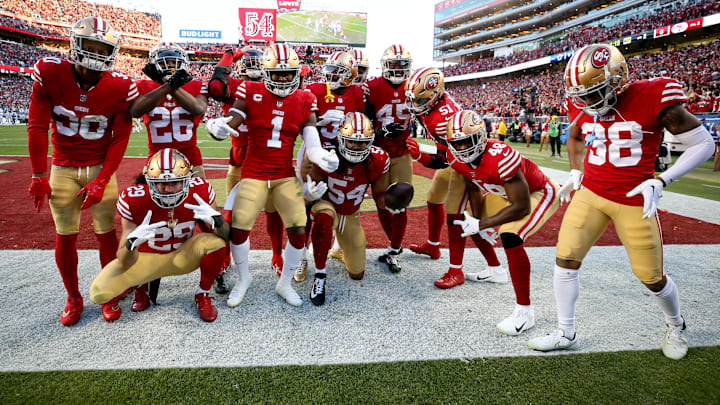
The reality as the team reaches the bye week, however, is starkly different. None of the rookies have carved out significant or consistent roles. Some of this is due to the complexity of the 49ers’ schemes, some due to positional competition, some due to physical development needs and some simply due to the normal learning curve that comes with transitioning to the NFL. But even accounting for those factors, the rookie class has not delivered what many expected. The lack of immediate impact has forced the team to lean heavily on veterans. It has exposed depth concerns that could become problematic as the season progresses. And it raises long-term questions about how the front office evaluates upside versus readiness.
This article breaks down why five of the most notable rookies—Ricky Pearsall, Renardo Green, Isaac Guerendo, Malik Mustapha and Jarrett Kingston—have disappointed heading into the bye week. Each section explores the gap between expectations and performance, analyzing film trends, scheme fit, developmental trajectory, roster context and the broader implications for the 49ers’ season and future planning. The goal is not to label these players busts—far from it. Instead, the purpose is to evaluate their progression honestly, highlight where the struggles lie and identify what must change for these rookies to become contributors worthy of their draft positions.
The 49ers still believe strongly in the long-term upside of this class. But at the midway point of the season, the reality is that the group as a whole has not met the expectations set when they arrived in Santa Clara. Their development—or lack thereof—now becomes one of the most important undercurrents of the 49ers’ bye-week evaluation period.
Ricky Pearsall: The First-Round Receiver Still Learning How to Fit Into an Elite Offense
Ricky Pearsall entered the season with as much buzz as any rookie receiver drafted by Kyle Shanahan in his 49ers tenure. His route running stood out on film. His footwork was nuanced. His body control was elite. His versatility was clear. And during training camp, he showed chemistry with both Brock Purdy and the second-team offense, flashing the ability to play all three receiver spots. Many in the organization believed Pearsall’s skill set was mature enough to earn early rotational snaps, particularly if the 49ers chose to preserve Brandon Aiyuk or Deebo Samuel by rotating snaps more frequently. Instead, Pearsall has struggled to carve out consistent playing time and has been used mostly in limited segments of games, often for spacing concepts rather than impact plays.
The biggest issue for Pearsall has been adapting to the timing-specific demands of Shanahan’s system. The 49ers offense is designed around precision rather than improvisation. Receivers are expected to break their routes at exact depths, on exact steps, with exact spacing relative to underneath defenders, linebackers and the quarterback’s progressions. Even highly talented rookies often struggle with this—the system famously challenged Brandon Aiyuk during his early years, and it has frustrated countless young receivers. Pearsall has found that reality firsthand. Film analysis shows several plays where he is half a step late on a break or slightly inside of his landmark, small details that completely change route spacing. When Purdy progresses through reads, even small timing errors lead to the route being skipped entirely. This phenomenon makes it difficult for any rookie to establish trust with the quarterback.
Another issue has been the depth chart. Aiyuk and Samuel dominate targets. Jauan Jennings plays critical possession snaps. Ronnie Bell and Chris Conley earned situational opportunities due to their blocking and situational awareness. Pearsall has simply not displaced anyone. And because Shanahan heavily leverages personnel grouping stability, it becomes harder for a rookie receiver to gain momentum unless injuries force their hand.
Still, this should not be interpreted as a sign of long-term failure. Pearsall’s athletic and technical traits are clear. When used, his ball tracking and strong hands remain evident. But heading into the bye week, it is undeniable that Pearsall has not delivered the early impact expected of a first-round pick. For a team dealing with constant conversation about Aiyuk’s future, the hope was that Pearsall would accelerate the transition. Instead, he remains firmly a developmental piece awaiting a larger role.