Introduction: A Season Tilted by Injuries Finds New Life With Herbert’s Return
The Los Angeles Chargers have spent much of this season wrestling with instability, inconsistency, and an identity that has been difficult to sustain across four quarters of football. Plagued by injuries to star players and grinding through a schedule filled with competitive matchups, the Chargers have often looked like a team capable of dominating in spurts but struggling to connect those moments into full-game execution. At the center of that volatility has been the absence of Justin Herbert, the franchise quarterback whose presence dictates both the rhythm and emotional tenor of the team.

Now, on the eve of a pivotal Monday night showdown with the reeling Philadelphia Eagles, the Chargers expect to have Herbert back in uniform and under center. His anticipated return changes the landscape of the matchup entirely. For Los Angeles, the game transforms from a survival test into a statement opportunity. For the Eagles, it represents a collision course with a star quarterback capable of exploiting weaknesses that have plagued them throughout their downturn.
This is not merely another primetime game. It is a convergence of trajectory, momentum, and urgency on both sides. The Chargers are clinging to hopes of surging back into postseason contention. The Eagles are fighting not to let their season spiral into deeper disarray. And Herbert — calm, cerebral, polished, powerful — steps back into the spotlight as the hinge on which everything may turn.
His return is more than a roster update. It is an emotional recalibration, a structural reset, and a potential spark for a team that has needed an anchor. This 4,500-word analysis explores the significance of Herbert’s comeback, the state of the Chargers’ offense and defense, the unraveling of the Eagles, the key matchups dictated by Herbert’s presence, and the broader implications for both franchises.
This is the kind of game that defines not only weeks, but seasons.
1. Herbert’s Return: Why His Presence Transforms the Chargers’ Entire Identity
When Justin Herbert plays, the Chargers look like a different team. Their offensive structure expands. Their confidence increases. Their explosiveness returns. The quarterback position touches every part of a football team’s identity — but for Herbert, the influence is even more pronounced because of how his skill set intersects with the team’s system.
Herbert’s absence forced the Chargers into conservatism. Without their star, they leaned on shorter passing sequences, simplified protections, and a run game designed to reduce volatility. Drives became slower, timing became less precise, and explosive plays were nearly impossible to manufacture consistently. While the team remained competitive, they lacked the one element that often differentiates mediocre teams from contending ones: offensive inevitability.
With Herbert returning, inevitability returns. His arm strength stretches the field. His ability to manipulate safeties opens passing lanes. His chemistry with receivers restores timing that had grown inconsistent. Most importantly, Herbert gives the Chargers the capability to erase deficits quickly — something they could not do without him.
His influence extends beyond the offense. Defensively, Herbert’s presence allows the coaching staff to approach game scripts differently. When the Chargers believe they can score quickly, they approach defensive aggression more confidently. Pass rushers play faster. Defensive backs play tighter. Situational calls become more strategic. The entire team’s psychology becomes rooted in possibility rather than hope.
Herbert’s return also impacts leadership. Teammates view him as the steadying force — no panic, no ego, no theatrics. His calm demeanor in high-pressure situations stabilizes both sidelines and huddles. When he is present, younger players feed off his demeanor. Veterans trust him implicitly. Coaches call plays with a wider scope.
In every measurable and emotional sense, Herbert’s return is transformational.
This Monday night game does not merely feature Herbert.
It is shaped by him.
2. The State of the Chargers: A Team Searching for Rhythm Reinforced by Its Leader’s Return
This season has pushed the Chargers through turbulence both internal and external. The offensive line battled injuries. The receiving corps cycled through absences. The defense oscillated between brilliance and collapse. The coaching staff has faced heavy scrutiny for schematic inconsistencies. Through these challenges, the Chargers remained competitive in most matchups but rarely dominant.
Herbert’s absence highlighted these inconsistencies more sharply. Without him, the Chargers could not mask structural flaws with his improvisational brilliance or downfield vision. Drives stalled. Third-down conversions dropped. Defensive units spent more time on the field, leading to fatigue and execution errors.
Now Herbert returns, but the team around him must rise to meet his level.
The offensive line must protect more consistently, particularly in interior pressure situations where the Eagles historically excel. The wide receiver group must sharpen separation, timing, and route discipline after inconsistent weeks. The running game must operate efficiently enough to prevent the Eagles’ defensive front from prioritizing pass rush.
The Chargers defense, meanwhile, must become more reliable. Herbert’s presence gives them scoring insurance, but that cannot mask persistent coverage lapses or late-game collapses. Brandon Staley’s scheme requires communication, disguise, and disciplined leverage. Those elements have fluctuated, but Herbert’s return creates opportunities for the defense to play more aggressively with leads.
Emotionally, the Chargers recognize this moment. Herbert’s return injects belief into the locker room. His teammates understand the magnitude of Monday night — a chance to course-correct the season, reverse perceptions, and build momentum.
But Herbert cannot do it alone.
The Chargers must match his readiness with cohesion, execution, and discipline.
3. The Eagles’ Downward Spiral: Vulnerabilities That Herbert Is Uniquely Suited to Exploit
On the other sideline, the Philadelphia Eagles arrive in crisis — a team fighting to halt a decline that has snowballed through missed assignments, offensive regression, and defensive breakdowns. Once a model of stability and power, the Eagles have weathered injuries, declining line play, and uncertainty at multiple positions.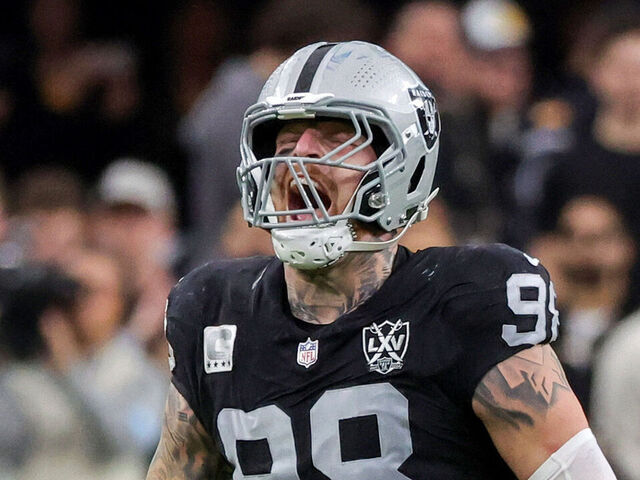
Their defense is the most glaring concern entering this matchup. The secondary has struggled mightily, allowing explosive plays and suffering breakdowns in both zone and man concepts. Safeties have been late rotating. Corners have surrendered leverage. Communication has fractured on crossing routes and layered patterns. These vulnerabilities align directly with Herbert’s strengths.
Herbert is one of the league’s best quarterbacks at attacking intermediate windows — the precise area where Philadelphia’s defense has been most vulnerable. His anticipation throws between linebacker and safety levels exploit hesitation. His back-shoulder timing punishes corners who retreat too deeply. His deep-ball accuracy tests defensive communication, which Philadelphia currently lacks.
The Eagles’ pass rush has also regressed. While still dangerous, the unit is no longer dominating every game script. Injuries and inconsistent gap discipline have created exploitable run lanes and diminished interior pressure. If Herbert has a clean pocket — even occasionally — he will find mismatches.
On offense, the Eagles face their own issues. Jalen Hurts has been limited by physical wear and inconsistent line play. Their run game lacks its earlier explosiveness. Their timing routes have been disrupted by pressure and defensive anticipation. With Herbert back, the Chargers offense may control time of possession, putting additional pressure on Hurts and forcing the Eagles into predictable passing situations.
This is the worst possible moment for Philadelphia to face an elite quarterback returning from injury with something to prove.
Herbert will not merely attack their weaknesses.
He is built to expose them.
4. Tactical Implications: How Herbert’s Return Reshapes the Chargers’ Offensive Blueprint
With Herbert back, the Chargers can expand their offensive philosophy meaningfully. Offensive coordinator Kellen Moore — often criticized for inconsistency but praised for creativity — now has access to the full playbook again.
Several tactical shifts come into play:
Verticality Returns
The Chargers without Herbert could not consistently push the ball downfield. With him, the vertical route tree reopens — go routes, deep outs, layered crossers, and seam shots all become legitimate threats.
Herbert’s arm changes defensive alignments instantly.
Pre-Snap Manipulation Increases
Herbert excels at reading disguises, adjusting protections, and identifying leverage advantages. The Chargers will use motion, stacks, and bunch sets to force the Eagles’ struggling secondary into decisions they have recently failed to execute.
Intermediate Timing Restored
Timing routes — digs, curls, hitches, posts — require elite precision. Few quarterbacks throw intermediate timing patterns better than Herbert. His return reestablishes the rhythm the offense lost.
Red-Zone Efficiency Improves
The Chargers’ red-zone offense dipped without Herbert because backup quarterbacks lacked pocket patience and anticipatory accuracy. Herbert’s return should correct this — especially against an Eagles defense that has allowed multiple red-zone touchdowns in recent weeks.
Run Game Stability Through Passing Threat
Not only does Herbert improve the pass game — he improves the run game. Defenses cannot load the box against Herbert without risking explosive passing plays, creating more favorable run looks.
Two-Minute Mastery Returns
Herbert in hurry-up situations is among the league’s most effective quarterbacks. The Chargers regain an entire situational dimension.
These adjustments collectively reshape the entire structure of the game — for both teams.
5. The High Stakes: Why This Monday Night Showdown Could Define Both Teams’ Seasons
Herbert’s return is not happening in a vacuum. It intersects with a moment of critical vulnerability and