Any conversation about the 49ers’ future begins with Fred Warner — the heart of their defense, the emotional engine of the locker room, and arguably the best linebacker in football. Warner’s possible return from injury represents one of the most consequential variables in the team’s offseason calculus. His leadership reaches beyond communication or alignment responsibilities; he is the rare defender whose presence elevates everyone around him.

When Warner is on the field, the 49ers’ defense becomes a living organism: fast, synchronized, aware, aggressive, and disciplined. Without him, the unit operates, but never at full intellectual or emotional capacity. Warner diagnoses plays before they develop. He manipulates offensive tendencies. He adjusts coverages on the fly. He ties the defensive front to the secondary with anticipation and precision. Few defensive players in the league — at any position — exert as much influence on both pre-snap and post-snap execution.
As the 49ers evaluate Warner’s recovery timeline, they are also evaluating how the defense must adapt should he require a cautious return. Even if Warner is trending positively, the team must plan for load management, rotational depth, and contingency structures. The inside linebacker depth chart is talented but inexperienced compared to Warner’s All-Pro excellence. Oren Burks, Dre Greenlaw (when healthy), and De’Vondre Campbell have flashed, but none replicates Warner’s command of spacing, route recognition, or quarterback manipulation.
The defensive scheme is built around Warner’s range. His ability to erase tight ends, carry receivers up the seam, and shut down check-downs enables the 49ers to play aggressive fronts that emphasize penetration and chaos. Without him, the defensive staff must make adjustments — more conservative alignments, deeper safety shells, or less frequent pressure packages.
The good news is that Warner has historically been one of the league’s most durable stars. He invests heavily in recovery and possesses an elite understanding of his body. The organization remains optimistic, but caution is necessary because the modern NFL punishes even minor missteps in workload decisions.
The precise timeline remains unclear, but internally the 49ers approach Warner’s return as a certainty — not a question — with the only variable being “when,” not “if.” That confidence influences every offseason move, from free agency targets to draft priorities. Warner’s health ensures the defense maintains its philosophical core; his temporary absence requires strategic insulation.
The 49ers know this: their championship aspirations are tied directly to Warner’s availability. His return is not just a medical event; it is a structural turning point.
2. The Free Agency Landscape: Difficult Questions, High-Value Decisions, and the Challenge of Sustaining Contention
The 49ers’ free agency landscape is one of the most complex in the league. Contenders face consistent roster turnover because success elevates the market value of role players and forces financially difficult decisions. San Francisco has mastered this process in recent years, letting certain veterans walk while bringing in mid-tier players who thrive in Kyle Shanahan’s system.
Yet this particular offseason presents heightened challenges. Several starters and key rotational contributors approach free agency at positions where depth is already thin. The team must navigate re-signings while also preparing for possible departures from units that have carried the team through playoff runs.
The defensive line presents the most urgent question. Steve Wilks unveiled an aggressive, hybridized front this season, but depth at defensive end and defensive tackle remains volatile. Javon Kinlaw, Clelin Ferrell, Arik Armstead, and others face potential transitions depending on cap implications. The team may prioritize rotational depth behind Nick Bosa to maintain the relentless edge pressure that defines their identity. Shanahan has repeatedly emphasized the importance of a deep defensive front, and history shows the unit is only as strong as its weakest rotation piece.
In the secondary, cornerback depth demands attention. Charvarius Ward has developed into one of the league’s top cover defenders, but the 49ers must ensure that the opposite side of the field remains sturdy. Young players have flashed but consistency remains elusive, and the free agency market offers several strong options. The team will not overspend, but they will seek value at a position where injuries and matchup volatility require depth.
On offense, the wide receiver room may require the most nuanced decision-making. Brandon Aiyuk is eligible for a major contract extension — one that will require creativity to structure alongside existing commitments to Deebo Samuel, George Kittle, and Christian McCaffrey. Aiyuk’s growth into one of the league’s premier route runners demands that he be treated as a foundational piece. He is as indispensable to the passing game as Kittle is to the run game. The 49ers want him long-term — but cap realities may force difficult conversations.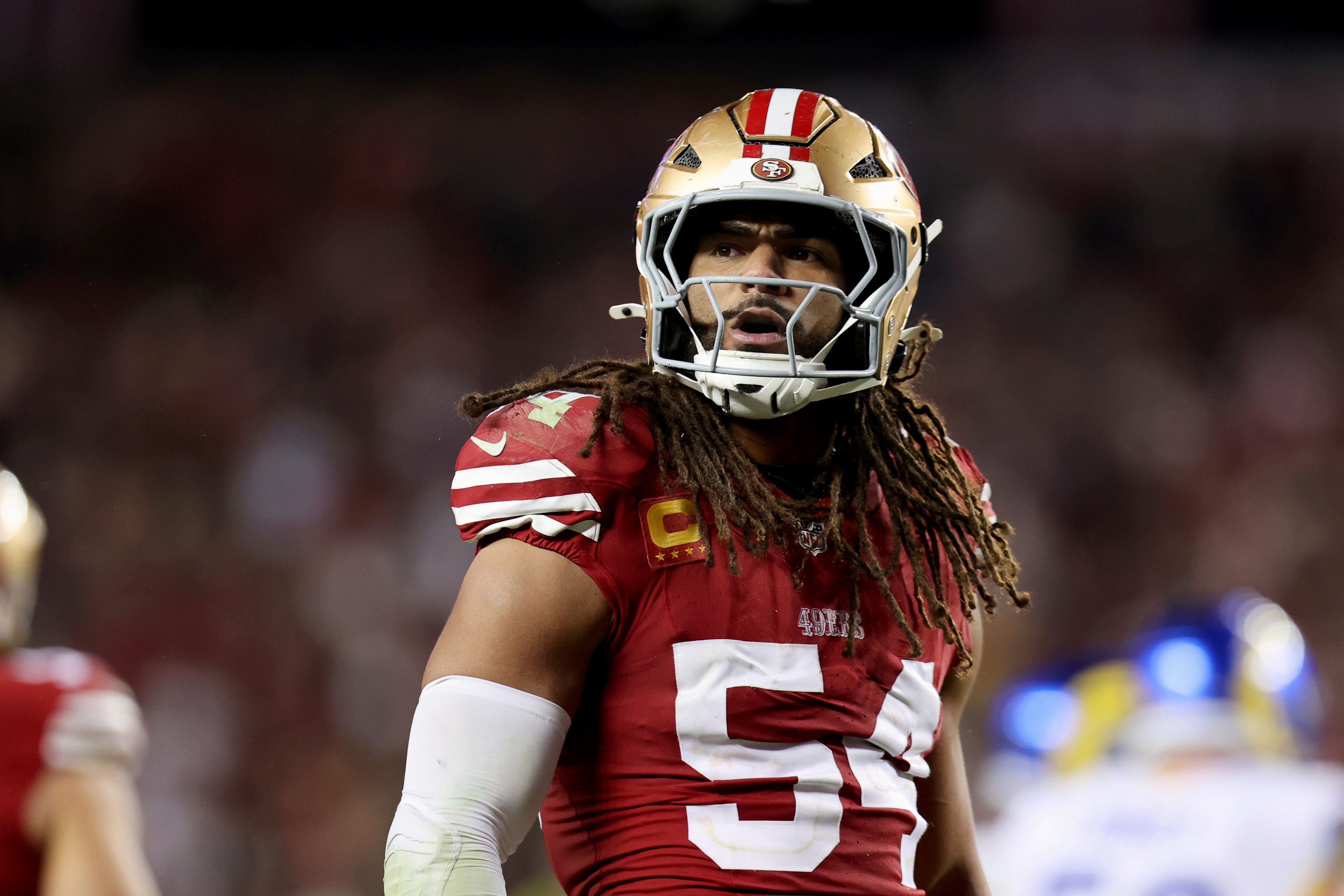
The offensive line also needs reinforcements. Trent Williams remains one of the best players in the sport, but the team understands they must prepare for eventual succession and also improve depth at both tackle and guard. Brock Purdy’s efficiency thrives behind stability, and protecting his low-cost contract window requires investment.
Then there is the quarterback room — Purdy is ascending but inexpensive, creating one of the NFL’s most valuable financial windows. The 49ers must ensure backup depth with experience and reliability, recognizing that their system demands intelligence and timing from the quarterback position.
This free agency period will define the next two years of the 49ers’ contention window. Retain the right core pieces, supplement role positions intelligently, and manage the cap with foresight — and the 49ers remain championship-caliber. Miscalculate, and the roster weakens in subtle but costly ways.
3. The Draft Blueprint: Priorities, Philosophies, and the Search for Future Foundations
The draft remains the lifeblood of the 49ers’ operation. Shanahan and Lynch have built a roster that reflects both their philosophical alignment and their collaborative approach. They prioritize toughness, football intelligence, versatility, and cultural fit. They do not chase scheme outliers. They trust development. They gamble on upside with the stability of a veteran foundation.
This year, their draft priorities likely center around three core areas: the offensive line, the defensive front, and the secondary.
The offensive line requires fresh investment, especially at tackle. While Trent Williams remains elite, the 49ers need a successor plan as he enters the later stages of his career. They must also strengthen the right side, particularly at guard, where inconsistency has occasionally disrupted the timing of the offense. A mid-first-round or early second-round tackle pick would represent the type of forward-thinking roster management the organization prides itself on.
Defensively, edge depth must be replenished. The 49ers have historically drafted and developed rotational edge players who complement their stars, but recent years have seen some misses. The draft offers an opportunity to add a young rusher who can rotate immediately and potentially ascend into a starting role within a season or two. Similarly, interior defensive line depth — particularly penetrators who can collapse pockets — will be a priority. Shanahan’s worldview has long emphasized that championships begin in the trenches.
The secondary represents another critical focus. The 49ers love versatile defensive backs who can handle slot responsibilities, rotate into coverage, and support in the run game. With offenses across the league increasingly using motion, stacks, and spacing manipulation, the 49ers need DBs who are smart, physical, and communicative. A Day 2 cornerback or safety could find immediate snaps.
Wide receiver may also be on the table — not because of lack of talent, but because of cap dynamics. Drafting receivers is a cost-effective hedge against long-term financial strain. Shanahan’s system is notoriously challenging for rookie receivers, but the 49ers trust their development infrastructure.
One additional wildcard: tight end. While George Kittle remains elite, the 49ers have long wanted a second tight end capable of functioning as both a blocker and pass catcher. The right prospect could unlock new offensive structures.
Finally, the quarterback position may receive a late-round developmental pick, continuing a pattern the 49ers have embraced even with Purdy entrenched as the starter.
The overarching draft philosophy remains unchanged: draft players who fit the culture, develop them, and allow the system to raise their floor while their upside emerges organically.
4. The Brock Purdy Factor: How His Rookie Contract Shapes Every Decision
No single element shapes the 49ers’ roster strategy more profoundly than Brock Purdy’s contract. As long as Purdy remains on a cost-controlled rookie deal, the 49ers possess one of the NFL’s most advantageous financial situations. They have a starting quarterback operating at a fraction of market value, enabling them to allocate resources aggressively at premium positions.
This reality has driven decisions such as the Christian McCaffrey trade and the retention of high-value core pieces across the roster. It also influences upcoming decisions on Aiyuk, Kittle, and defensive depth.
However, Purdy’s contract window is narrowing. After next season, extension conversations will begin. His increasing market value — likely in the $40–50 million range depending on timing — will fundamentally reshape the budget.
Thus, the 49ers must maximize the current window. That requires aggressive short-term decision-making in free agency while simultaneously preparing contingency plans for the cap-compressed future.
In many ways, Purdy accelerates the urgency of every offseason move. The roster must remain elite now, not later. Depth must be replenished quickly. Expensive veterans must be evaluated through the lens of diminishing cap flexibility.
Yet Purdy’s presence also fosters long-term optimism. He plays with efficiency, discipline, and situational awareness — traits that allow Shanahan’s system to flourish. His accuracy and anticipation cover for roster weaknesses. His mobility adds dimensions to the offense.
As long as Purdy remains composed, durable, and productive, the 49ers remain contenders. But the front office understands the necessity of balance: invest in the now, but draft for the future.
5. Culture, Chemistry, and the Human Factor: The Core That Makes Everything Work
One element outsiders often underestimate is the cultural infrastructure that sustains the 49ers. This is not a team held together by talent alone — it is a united environment shaped by leadership, accountability, and belief.
Players repeatedly emphasize that the locker room is different from others around the league. Veterans like Warner, Kittle, Williams, and McCaffrey model professionalism. Shanahan’s coaching style blends demanding precision with consistency. Lynch enforces standards through communication and transparency.
Every offseason decision — from free agency to the draft — must maintain and strengthen this culture.
This is why the 49ers rarely pursue volatile players, even if talented. It is why they prefer internal development over splashy signings. It is why players feel empowered to lead and hold each other accountable.
The human factor matters. Chemistry matters. The 49ers’ resilience in adversity — such as quarterback injuries, playoff heartbreak, and postseason challenges — stems directly from these cultural pillars.
The organization knows that losing culture is easier than building it. Every roster addition must align with it. Every contract extension must reward it. Every draft pick must fit into it.
This is why the team remains confident that even as roster changes come, the foundation remains unshakeable — if managed properly.
6. The Long-Term Outlook: Strategic Patience, Calculated Aggression, and Sustaining the Championship Window
Looking ahead, the 49ers face a dual-task challenge: sustain their championship window while preparing for inevitable transition. This requires strategic patience blended with calculated aggressiveness.
Patience ensures the team does not panic in free agency, overpay for temporary needs, or sacrifice draft capital without long-term value. Aggressiveness ensures the team keeps pace with the elite — the Chiefs, the Ravens, the Eagles, and other contenders.
The 49ers must walk this line carefully.
Their long-term success will depend on:
The timing of Aiyuk’s contract extension.
The strategic reinforcement of the trenches.
The drafting of long-term replacements for aging stars.
The preservation of coaching continuity.
The calculated usage of Purdy’s contract window.
If the front office manages these components effectively, the 49ers will remain one of the league’s superpowers — a model franchise capable of competing for championships annually.
The upcoming offseason represents a pivotal juncture. Warner’s return. Free agency decisions. Draft strategy. Cap management. All of it shapes the next chapter.
But the 49ers are built for this moment. Their foundation is strong, their philosophy is sound, and their leadership — from the front office to the locker room — remains among the league’s most respected.
The questions are real.
But so are the answers.