He finished his 49ers career with three Super Bowl rings and contributed meaningfully to each championship. Without Craig’s multidimensional contributions, the West Coast Offense does not reach its fullest expression. Montana does not receive the same schematic support. Rice does not benefit from the same defensive attention shifts. The dynasty does not achieve the same level of dominance.
Craig was not simply a piece of the system. He was one of its engines.
4. Statistical Case vs. Historical Influence: Why Craig’s Canton Debate Has Remained So Polarizing
Despite his transformative impact, Roger Craig has spent decades on the outside of Hall of Fame consideration. His case has long been one of the most complex and polarizing among eligible players. The debate often centers on one central question: how should the Hall weigh statistical production against schematic influence?
Craig’s raw career numbers are strong but not overwhelming. He retired with 13,100 all-purpose yards, four Pro Bowl appearances, one All-Pro selection, and four 1,000-yard rushing seasons. His rushing totals do not match those of some Hall of Fame running backs who played longer or in run-heavy systems. His receiving numbers, while exceptional in context, appear modest when compared to modern dual-threat backs who benefit from higher-volume passing eras.
But focusing solely on raw numbers misses the essence of Craig’s candidacy.
Craig was not a product of volume. He was a product of innovation.
He did not benefit from schemes designed to inflate statistics. He inspired schemes designed to evolve offensive football. The West Coast Offense leaned heavily on balance. The 49ers distributed touches across multiple stars. Craig’s versatility was a weapon, but it did not translate into the kind of statistical accumulation that often defines Hall of Fame résumés in the modern era.
If Craig played today, his numbers would be astronomical. He would command 80+ receptions per season. He would accumulate receiving yards at a rate comparable to elite slot receivers. He would be a fantasy football phenomenon. But the 1980s were a different world — one where Craig’s contributions cannot be measured by contemporary statistical standards.
The Hall of Fame’s mission statement emphasizes honoring players who changed the game. Craig unquestionably fits that criterion. His role in defining an entirely new offensive archetype makes him one of the most influential backs of his era.
The fact that he has waited this long reflects the Hall’s historical struggle to balance statistics with innovation. But as the league increasingly embraces hybrid players, versatility, and positionless football, Craig’s impact becomes even more clear — not as a historical footnote, but as a foundational shift.
5. The Road to 2026: Why This Finalist Selection Represents a Turning Point in Hall of Fame Evaluation
Roger Craig’s selection as a finalist for the 2026 Hall of Fame class marks a significant turning point in how the selection committee evaluates historically underappreciated players. A growing movement within the Hall’s voting body has emphasized the importance of contextual evaluation — analyzing players through the lens of their era, their influence, and their unique contributions.
For years, Craig was a victim of being ahead of his time. His skill set became fully valued only decades after he retired, once the NFL embraced the very style of offense he helped pioneer. Younger voters, historians, and analysts have increasingly recognized that Craig’s contributions transcend statistics. They align with the principles that define modern football.
His candidacy has also benefited from presentations by advocates who have brought forward film analysis, advanced metrics, and historical comparisons. Craig’s influence on players like Marshall Faulk, Thurman Thomas, Brian Westbrook, and Christian McCaffrey has gained renewed attention. His peers — including Hall of Fame teammates and opponents — have consistently emphasized that Craig was one of the most complete backs they ever faced.
Moreover, the modern NFL has made it clear that hybrid players are among the most valuable offensive weapons. This shift has highlighted Craig’s legacy more prominently, illustrating that he was not merely ahead of his time — he was the blueprint.
The committee’s decision to elevate Craig to finalist status reflects a broader recognition that transformative players deserve recognition even if their era limited their statistical accumulation. Craig’s body of work, combined with his championships, leadership, and innovation, has finally found its moment.
2026 provides his best opportunity yet to take his rightful place among the sport’s immortals.
6. Legacy and Impact: Why Craig Belongs in Canton — and What His Induction Would Symbolize for the NFL
Roger Craig’s legacy reaches far beyond the numbers. He represents the evolution of the running back position from a ground-based role to a multidimensional one. His influence permeates modern offenses across the league. Every time a running back motions out wide, runs a choice route, catches a timing pass in stride, or manipulates a linebacker in coverage, Craig’s legacy echoes through the playbook.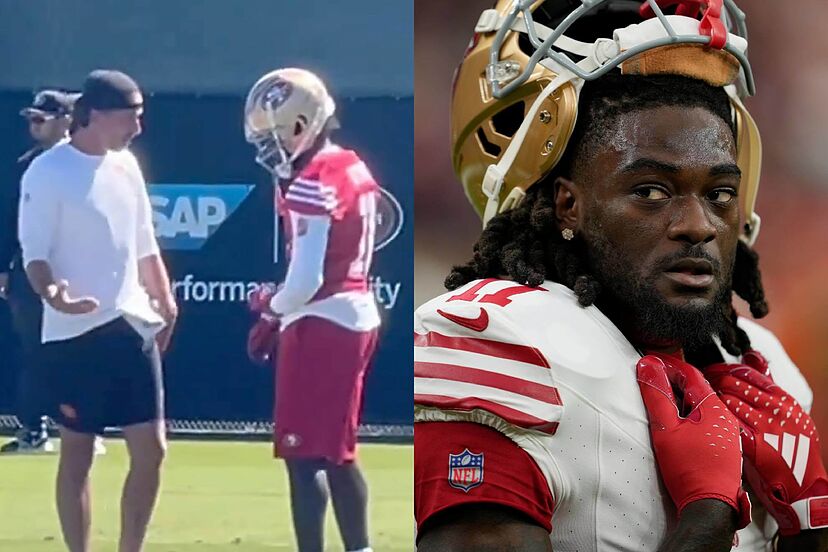
His induction into the Hall of Fame would symbolize recognition of innovation — the idea that players who reshape the game should be honored alongside players who excel through traditional metrics. It would signal that the Hall values strategic evolution as deeply as statistical dominance.
It would also honor one of the most important eras in football history. The 49ers dynasty is incomplete without Craig. Montana and Rice are immortal, but their success was supported by players like Craig who expanded the offensive possibilities. His induction would complete the narrative of one of the NFL’s greatest teams.
Most importantly, Craig’s induction would carry emotional resonance for fans who watched him redefine excellence with every high-knee stride. For teammates who admired his work ethic, toughness, and leadership. For coaches who recognized his intellect and versatility. For younger players who see themselves in the blueprint he created.
If he enters Canton in 2026, Craig will not simply join the Hall of Fame.
He will elevate it.
Conclusion: Roger Craig’s Moment Has Finally Arrived
Roger Craig’s selection as a finalist for the 2026 Pro Football Hall of Fame is more than a ceremonial milestone. It is a long-overdue acknowledgment of a player who transformed offensive football and helped build one of the greatest dynasties in sports history. His career represents innovation, versatility, and the relentless pursuit of excellence.
For decades, Craig has stood on the doorstep of Canton. Now, the door is finally open.
And if fairness prevails, Roger Craig — the original dual-threat, the innovator of modern running back play, the heartbeat of the 49ers dynasty — will soon take his rightful place among the legends of the game.