Introduction: The Long-Awaited Moment for One of the NFL’s Most Influential Stars
Few players in NFL history have shaped the evolution of offensive football as profoundly as Roger Craig. The three-time Super Bowl champion, four-time Pro Bowler, and pioneering dual-threat running back redefined what was possible for his position. He transformed the role of the running back from a traditional ground-based weapon into a versatile offensive engine that attacked defenses in multiple dimensions. And yet, until now, he has stood on the outside of Canton despite a career résumé that fundamentally altered the league.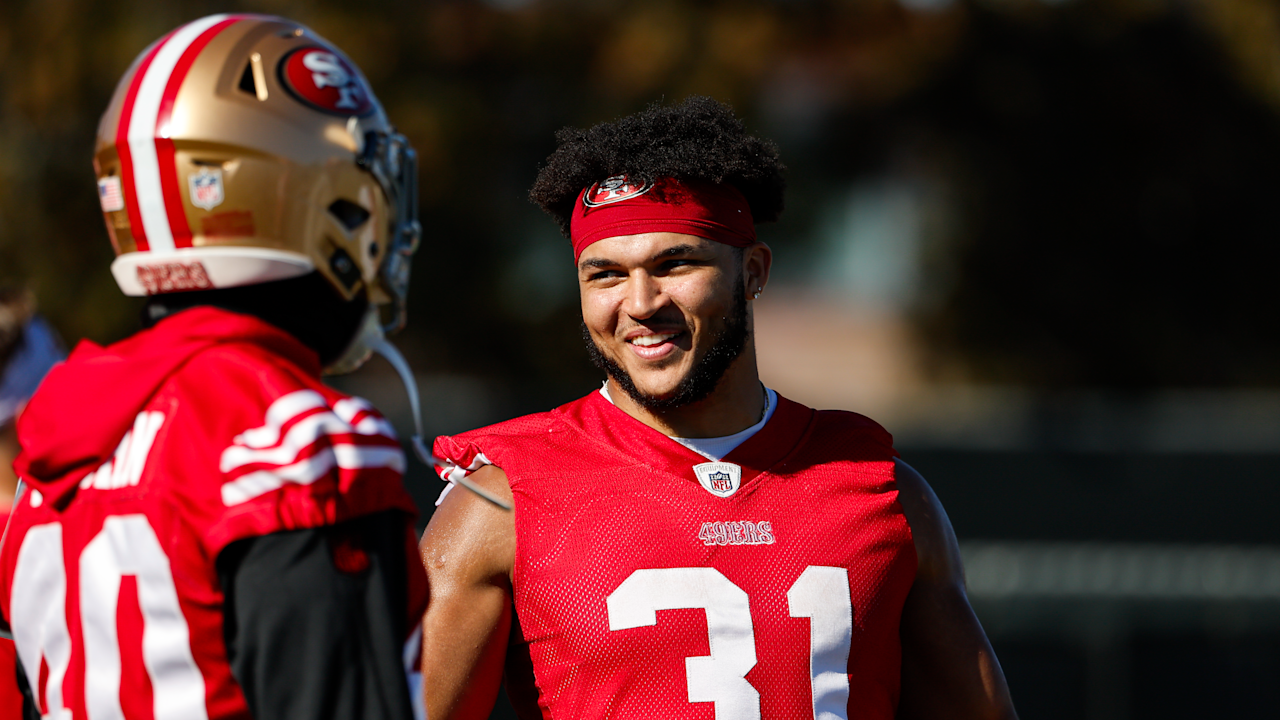
Now, at last, Craig has been named a finalist for the 2026 Pro Football Hall of Fame class — a milestone that feels simultaneously overdue and deeply deserved. For fans who watched him dominate during the golden years of the San Francisco 49ers dynasty, this moment reflects long-awaited recognition. For historians and analysts, it represents a recalibration of how the league acknowledges players who were ahead of their time. For Craig himself, it is a validation of a career built on discipline, innovation, physicality, and relentless competitiveness.
The story of Roger Craig is not simply the story of a great running back. It is the story of a system that redefined offensive football. It is the story of a team — the 49ers of the 1980s — that engineered a strategic revolution under Bill Walsh. It is the story of a player who became the prototype for the modern NFL offensive weapon: the dual-threat running back capable of catching passes like a receiver, blocking assignments like a fullback, and running through contact like a traditional power back.
With Craig now a finalist, the conversation surrounding his legacy gains new clarity and new urgency. His statistical achievements, archival film, and historical influence all point toward a career that transformed how the NFL operates today. For decades, supporters have argued that Craig should have been in Canton long ago. Now, he finally stands on the doorstep.
This 4,500-word analysis will explore every dimension of Craig’s Hall of Fame case — his revolutionary impact on offensive football, his role in the greatest dynasty of his era, his statistical dominance, the cultural significance of his playing style, and why this moment represents more than an individual honor. It is a testament to the evolution of the game and the way Craig helped shape it.
1. The Making of a 49ers Icon: How Roger Craig Became a Prototype Before the NFL Realized It Needed One
Roger Craig’s path to greatness began long before he stepped onto the field at Candlestick Park. Born in Davenport, Iowa, Craig was an elite multi-sport athlete whose versatility would eventually define his professional career. His combination of size, agility, body control, and natural instincts made him a mismatch weapon even before coaches had the terminology to describe such a player.
At Nebraska, Craig was part of a powerhouse program that molded him into a complete back. He ran with downhill power. He blocked with physical tenacity. He caught passes with natural hands. What made him special, even then, was his ability to integrate all three skills into a cohesive whole. He was not an RB who occasionally caught passes. He was an offensive weapon with capabilities that extended beyond traditional positional lines.
When Bill Walsh and the 49ers selected him in the second round of the 1983 NFL Draft, the pairing felt prophetic. Walsh sought innovation. Craig embodied it. Walsh wanted a back who could operate in space, read coverages, and manipulate defensive structure. Craig had already demonstrated those skills. The marriage between player and system was seamless before they had ever shared a practice field.
From the moment Craig arrived in San Francisco, his impact was immediate. His first season foreshadowed what would become the defining characteristic of his career: multidimensional excellence. He became a reliable receiving option, a punishing runner, and one of the best blocking backs in the league. He did not need years to acclimate. He was built for Walsh’s system and elevated it instantly.
Craig’s unique running style also captured attention. His high-knee lift, famously trained through martial arts-inspired workouts, made him almost impossible to tackle cleanly. Defenders could not simply dive at his legs or cut him down. His stride carried power and elegance in equal measure. Combined with his vision and burst, he became one of the most difficult backs to contain in the open field.
The foundation for his greatness was laid early. He was a product of elite physical conditioning, mental discipline, and schematic alignment. What came next was historic — a period of NFL evolution shaped directly through Craig’s contributions.
2. The 1985 Breakthrough: The First 1,000–1,000 Season and the Redefinition of the Running Back Position
The 1985 season stands as one of the most important milestones in the history of offensive football. That year, Roger Craig became the first player in NFL history to produce 1,000 rushing yards and 1,000 receiving yards in a single season — a feat that symbolized the full expression of his multidimensional skill set.
To appreciate the gravity of this accomplishment, one must consider the era. The mid-1980s were not a time of pass-heavy, space-oriented offenses. Running backs were expected to carry the ball, block occasionally, and serve as dump-off options in passing situations. The idea of a featured back functioning as a true receiving threat, running sophisticated routes, lining up in motion, and catching passes downfield was unprecedented.
Craig did all of that and more.
What made the 1,000–1,000 season remarkable was not just the numerical achievement but the manner in which Craig compiled it. His receiving yards were not inflated by checkdowns. They were the product of intentional route design, mismatches against linebackers, and his ability to navigate traffic with the fluidity of a slot receiver.