The Packers have entered a new era, one centered around a young quarterback, emerging playmakers, and a defense undergoing philosophical transition. Alexander was expected to be a foundational piece of that future. Instead, Green Bay now finds itself wrestling with the most difficult question a team can face: how do you handle a premier talent whose trajectory has become unpredictable?
This 4,500-word examination explores the layers beneath the headline. We will analyze the season’s context, organizational factors, cap realities, locker-room dynamics, coaching philosophy, on-field performance, and the potential paths forward for one of the league’s most gifted defenders. This is not simply a case study in roster management. It is a story about identity, expectations, and the pressure for franchises to make decisions that balance the future without compromising the present.
Jaire Alexander remains one of the NFL’s most polarizing talents — brilliant, volatile, and fiercely competitive. What the Packers decide will shape not just their defense, but their franchise.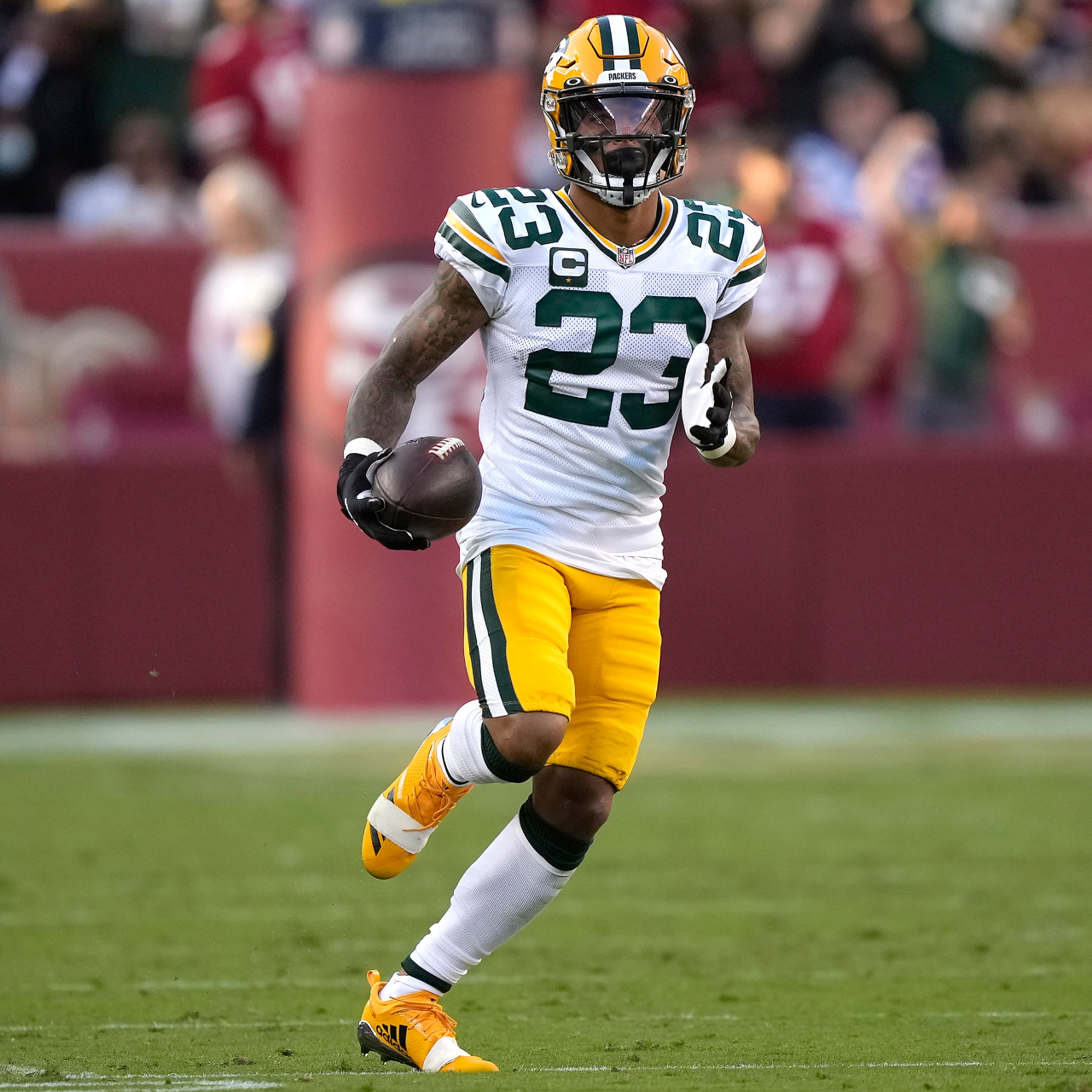
1. The Rise of a Superstar: How Jaire Alexander Became One of the NFL’s Most Respected Cornerbacks
To understand the magnitude of the Packers’ current dilemma, one must revisit the ascension that made Jaire Alexander indispensable in the first place. Drafted 18th overall in 2018, Alexander arrived in Green Bay with blazing speed, elite change-of-direction ability, natural swagger, and a mentality built for the league’s most unforgiving position. He played with confidence far beyond his years, challenging elite receivers without hesitation, tackling aggressively despite his size, and quickly becoming a cornerstone of the Packers’ defensive resurgence.
His 2020 season elevated him into the national spotlight. Alexander was not merely good — he was special. His breakout campaign showcased a cornerback with the rare ability to erase half the field, suffocate top receivers in man coverage, and anchor a secondary that relied heavily on his presence. His advanced metrics placed him among the league’s elite. His film revealed a technician who paired elite athletic traits with cerebral anticipation. His swagger became part of the team’s identity.
Opposing quarterbacks avoided him. Coordinators schemed away from him. Teammates fed off his energy. Green Bay rewarded him accordingly, making him the highest-paid cornerback at the time of his extension — a contract designed not simply to secure talent, but to establish a franchise foundation.
Yet the qualities that made Alexander exceptional — competitiveness, emotion, swagger — were always double-edged. They fueled his dominance, but they could also create tension when circumstances shifted. As the team evolved, leadership changed, roles adjusted, and expectations intensified, the equilibrium between Alexander’s personality and the organizational structure became more fragile.
The Packers extended him because he was a rare talent. Now they must evaluate that talent through a very different lens.
2. The Season of Turbulence: Injuries, Suspensions, and Questions About Commitment
The uncertainty surrounding Alexander’s future did not emerge in a vacuum. It built gradually over the course of a turbulent season that forced the Packers to confront uncomfortable questions about reliability, accountability, and alignment.
Injuries played a significant role. Alexander missed multiple games with shoulder, back, and lower-body issues, creating frustration on both sides. While injuries are part of football, availability matters, especially for a player carrying a premium contract. Coaches and executives value consistency as much as dominance, and Alexander’s absences disrupted continuity in a young defensive backfield.
But injuries alone are not what placed Alexander’s future into question. The more significant issues were behavioral and cultural. Several incidents raised internal concerns, culminating in a suspension that left the organization grappling with broader implications.
The most publicized moment occurred when Alexander appointed himself a team captain before a game without prior approval — a gesture that, while partially intended as leadership, was perceived internally as crossing structural boundaries. It was symbolic of deeper tension. Later, comments about participation decisions and availability created further concern about alignment with team expectations.
Each incident individually may have been manageable, but together they painted a picture of a disconnect between player and organization. For a team built heavily on culture, cohesion, and trust, those disconnects matter.
Alexander’s frustrations were not baseless. He is fiercely competitive, and losing streaks, defensive inconsistencies, and shifting roles impacted his engagement. But the Packers’ leadership — particularly under a new defensive coaching structure — has placed renewed emphasis on discipline, communication, and buy-in. Any deviation becomes magnified.
This season forced Green Bay to ask a difficult question: can they depend on Alexander not simply physically, but emotionally, day-to-day, week-to-week, month-to-month?
The answer is no longer clear.
3. Defensive Philosophy and Fit: How Coaching Changes Reshaped Alexander’s Role
One of the most overlooked factors affecting Jaire Alexander’s future is the philosophical shift within the Packers’ defensive structure. Under previous defensive coordinators, the system often emphasized press-man coverage with Alexander as the centerpiece, shadowing elite receivers and operating in isolation. This played directly into his strengths.
However, the defensive philosophy has evolved sharply as Green Bay looks to modernize its scheme. The new approach incorporates more zone concepts, split-safety coverages, pattern-match structures, and disciplined spacing rather than pure man-to-man reliance. While Alexander is fully capable of thriving in zone-match systems, the shift inevitably changes how frequently he can dictate matchups, showcase his strengths, and exert emotional influence on the game.
Elite cornerbacks want involvement. They want action. They want responsibility.
When the system asks them to operate within a structure rather than dominate their matchup individually, frustration can emerge.
Internal reports and on-field body language have hinted at times that Alexander struggled with aspects of the role transition. Not because he could not execute it — but because it did not maximize his identity as an elite competitor.
For the Packers, the shift makes sense strategically. For Alexander, the adjustment has been more complicated.
Coaching changes are normal. Role evolution is normal. But when a franchise alters its defensive philosophy while paying a cornerback top-tier money largely for his man-coverage prowess, philosophical tension becomes inevitable.
Thus, the question arises:
Is the current system built for Jaire Alexander?
Or does his ideal usage exist outside the Packers’ present defensive identity?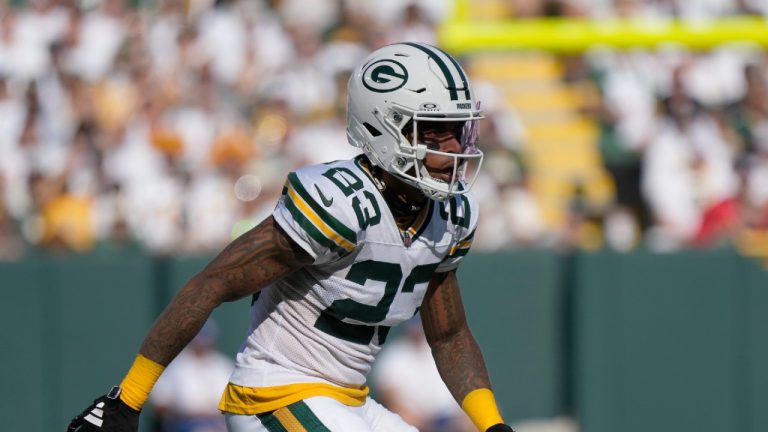
This tension is central to the decision facing the franchise.
4. The Contract Component: Cap Realities, Trade Scenarios, and Difficult Options
One of the most defining elements of Jaire Alexander’s uncertain future is financial. His contract is large, complex, and structured in a way that makes any decision — keeping him, restructuring, or trading him — consequential.
The Packers must navigate several realities:
The first is cap hit. Alexander carries one of the largest cap numbers for a cornerback in the league. When healthy and fully engaged, he justifies that cost. When injuries accumulate or alignment falters, the cost becomes difficult to justify, particularly for a team building around a young quarterback and evolving identity.
The second is dead money. Moving on from Alexander comes with significant short-term cap ramifications. A post-June-1 trade reduces the immediate hit, but creates future implications that require careful planning. A pre-June-1 move would be expensive, though not prohibitive if the Packers believe a cultural reset is necessary.
The third is trade value. Alexander’s talent ensures that his market would be strong. Contenders desperate for elite cornerback play would line up. Teams running man-heavy schemes would be immediate fits. His age, talent profile, and top-tier play when healthy make him one of the league’s most valuable defensive assets — even considering his recent volatility.
The fourth is opportunity cost. If the Packers move Alexander, they would likely shift toward rebuilding their secondary identity around younger players while using the returned assets to bolster other positional needs. If they keep him, they must re-establish alignment and ensure his role matches his compensation.
The decision is not simple. It is a matrix of financial risk, cultural considerations, scheme fit, and competitive timelines.
The Packers cannot afford to get it wrong.
5. Locker-Room Dynamics and Leadership: How Teammates View the Situation
One of the most critical — and least publicly visible — components of Green Bay’s decision is the internal dynamic. Jaire Alexander is highly respected within the locker room. His competitiveness, confidence, and fire have elevated teammates during high-pressure moments. He is charming, magnetic, and fiercely loyal to fellow players. Few teammates would describe him as anything other than passionate and committed.
Yet leadership is not only about passion. It is about consistency. And this season raised questions